The Conversation You Keep Having With Yourself Is the Problem


The clock on the nightstand just clicked to 5:00 AM.
There’s a specific kind of silence that exists at that hour. It’s heavy. It’s thick. It’s the kind of quiet that doesn’t just sit in the room; it pushes against you. And in that silence, before the first email pings or the first notification light flickers on your phone, there is a voice.
It’s been waiting for you to wake up.
It doesn’t start with a “Good morning.” It starts with a question. A jab. A reminder of that one thing you didn’t finish yesterday or that one decision that’s been sitting in your gut like a stone.
I sat there this morning, watching the light slowly crawl across the floorboards of my office, and I realized something. We spend thousands of dollars on coaches. We hire consultants to audit our systems. We spend hours analyzing our competition’s move. But the most dangerous person in your business: the one who can dismantle your vision before lunch: is the one you’re listening to right now.
The conversation you keep having with yourself isn’t just background noise. It’s the blueprint.
The Silent Boardroom in Your Head
There’s a conversation happening right now that nobody else can hear.
It’s not in a boardroom. It’s not on a Zoom call. It’s not sitting in your inbox waiting for a “reply all.” It’s happening in the six inches of space between your ears. And if we’re being honest, it’s been going on longer than you want to admit.
See, as leaders, we are professional communicators. We know how to move people. We know how to sell a vision. We know how to stand in front of a team and paint a picture of a future that doesn’t exist yet. We are fluent in the language of encouragement for everybody else.
You’ll hype your team when they’re flagging. You’ll pour into your clients until your own tank is dry. You’ll show up in every room with energy and vision and fire because that’s what the role requires. You are the architect of everyone else’s confidence.
And then you go home.
The lights go out. The door closes. And the other voice: the one you don’t let near a microphone: starts its shift.
Is this actually working?
Am I moving fast enough, or am I just running in circles?
What if I’m building the wrong thing entirely?
And the most dangerous part? You don’t challenge it. You don’t ask it for data. You don’t cross-examine it like you would a vendor who’s overcharging you.
You just… agree with it.

The High Cost of the Negative Loop
Here is the truth that most entrepreneurs learn the hard way: your inner dialogue is either building your vision or quietly dismantling it. There is no neutral ground.
The self-talk for leaders is the software that runs your leadership hardware. If the software is buggy, the machine is going to crash, no matter how powerful the engine is.
The problem with a negative inner loop is that it doesn’t stay in your head. It’s not a secret. You think you’re hiding it behind a tailored suit and a “let’s get it” caption on LinkedIn, but you aren’t.
It leaks.
It leaks into your decisions. You start playing not to lose instead of playing to win. You start second-guessing your intuition because that voice told you that your “gut” is just a fancy word for “uninformed.”
It leaks into your relationships. You become defensive. You misinterpret feedback as an attack. Why? Because the voice in your head has already spent all morning attacking you, so you’re already in a defensive crouch before you even walk into the meeting.
But worst of all, it leaks into the way you show up in every room you walk into.
The people closest to you: your co-founders, your executive assistants, your spouse: they can feel the hesitation. They can feel the vibration of the second-guessing. They can sense when the leader in front of them doesn’t fully believe in the mountain they’re asking everyone else to climb.
And let me tell you something: doubt is contagious. It spreads faster than a viral tweet. If you don’t believe the words coming out of your own mouth, don’t expect your team to follow you into the fire.
How to Audit the Narrator
So, how do you change a conversation that has been running on autopilot for years?
You start by auditing it. You have to stop being a passive listener to your own thoughts and start being an active participant. You have to pay attention to what you’re actually saying to yourself: not the affirmations you have taped to your mirror (though those are fine), but the real talk. The 2 AM talk. The “I don’t know if I can do this” talk.
When that voice tells you that you’re failing, don’t just accept the verdict. Demand the evidence.
This is where the shift happens. You don’t combat fear with fake positivity. You don’t try to “good vibes” your way out of a crisis. You combat fear with facts.
Look at what you’ve already built.
Look at the fires you’ve already walked through and didn’t get burned by.
Look at how far you’ve already come from where you started.
If that voice says, “You’re going to lose everything,” you counter it with, “I’ve started from zero before and I’m still standing.” If it says, “Nobody is going to buy this,” you counter it with the names of the clients who are already paying you.
The conversation changes when you stop letting fear write the script and start letting your track record handle the narration.
You Are the Narrator, Not Just the Subject
Here is the core lesson I want you to carry into your day today: You are not just the subject of your story. You are the narrator.
In every great book, the narrator chooses what gets emphasized. The narrator chooses which scenes get replayed in slow motion and which ones are just a footnote. The narrator chooses the tone: is this a tragedy or is it a triumph?
As a leader, you have to take the pen back.
Choose better.
Speak better: to yourself.
Lead the conversation in your own head before you try to lead anybody else.
Because the leader the world needs you to be: the one your family, your team, and your vision deserve: starts with the conversation that nobody else hears.
Stop being a victim of your own thoughts and start being the commander of them. Your business depends on it. Your peace of mind depends on it.
Hold the Standard for Yourself
In Episode 014, we talked about not apologizing for your standards. But today, I’m challenging you to apply that same standard to your internal world.
Don’t accept low-standard thoughts. Don’t allow mediocrity to take up space in your mind. If you wouldn’t let a consultant speak to your team the way you speak to yourself, then fire that version of you.
The room you’re supposed to be in is being built right now, brick by brick, by the words you speak when the lights are low.
What’s the one thing you’ve been telling yourself you “can’t” do this week? Audit it. Challenge it. And rewrite the script.
Hold the standard.
Protect the peace.
Lead the narrative.
I’ll see you at the top.
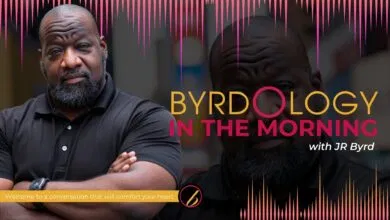
J. Richard Byrd \ www.jrichardbyrd.com \ is a business development mentor, media strategist, and CEO of The ByrdOlogy Group. ByrdOlogy In the Morning is a 4-minute daily leadership devotional available on YouTube, Spotify, and all major podcast platforms. \ www.BLKHustle.com/byrdologyinthemorning \

J. Richard Byrd \ www.jrichardbyrd.com \ is a business development mentor, media strategist, and CEO of The ByrdOlogy Group. ByrdOlogy In the Morning is a 4-minute daily leadership devotional available on YouTube, Spotify, and all major podcast platforms. \ www.BLKHustle.com/byrdologyinthemorning