AI Summaries vs. Human Intuition: Which Is Better For Your Daily Strategy?
It’s the first week of July, and the air in the room is already heavy with that thick, summer humidity that makes you feel like you’re breathing through a wet wool blanket. I’m sitting here with a cup of coffee that’s cooling faster than I’d like, staring at my inbox.
My screen is flooded. There are AI-generated "morning digests," automated market summaries, and three different "predictive strategy" reports waiting for my click. They promise to tell me exactly what happened while I was sleeping and exactly what I should do before lunch. It’s clean. It’s efficient. It’s data-driven.
And yet, something in the pit of my stomach is pulling in the opposite direction.
That’s the tension of the modern leader, isn't it? We are the first generation of executives who can have a machine summarize a thousand-page industry shift in three bullet points, but we’re also the ones who still have to go into a boardroom, or a Zoom room, and look people in the eye.
The machine can give me the summary, but it can't give me the "soul" of the situation.
Today, we’re talking about the battle between the AI summary and human intuition. In this high-stakes July heat, as we hit the mid-year stride, which one should be driving your daily strategy?
The Seductive Trap of the TL;DR
Let’s be honest: AI summaries are sexy.
There is nothing quite like the feeling of "skipping the line." When you’re a busy professional, a family man, or a founder carrying the weight of a dozen families on your payroll, time is the only currency that actually matters. So, when a tool tells you, "Don’t read the transcript; just read these five sentences," your brain screams Yes, please.
I fell for it hard about three months ago. I was trying to stay on top of a shifting media landscape while managing three different projects. I started relying almost exclusively on AI-generated summaries of my meetings and industry news. I felt like a god. I was "consuming" ten times more information than I ever had before.
But about two weeks in, I realized I was becoming a mile wide and an inch deep.
I was in a strategy session with my team, and I made a recommendation based on a "trend" my AI summary had highlighted three days in a row. One of my lead strategists looked at me and said, "Rich, that’s what the data says, but have you talked to the clients? They aren’t pivoting because of the trend; they’re pivoting because they’re scared of the upcoming election cycle. The data shows the move, but it doesn't show the fear."
I went silent. My AI hadn't mentioned fear. It had mentioned "market volatility indices."
The summary told me what was happening. My intuition: and the intuition of my team: was the only thing that could tell me why.
Why Your "Gut" Is Actually a Supercomputer
People talk about intuition like it’s some magical, mystical force: like a psychic connection to the universe. It’s not.
Intuition is simply high-speed pattern recognition. It is your brain processing thousands of micro-experiences, past failures, "vibrations" in a room, and tone-of-voice shifts that you’ve witnessed over twenty years of leadership. It’s a database that hasn't been coded into a Large Language Model yet because it’s written in the language of lived experience.
When you walk into a meeting and you sense that your lead developer is about to quit, even though his performance metrics are "green" on the dashboard, that’s not a guess. That’s your intuition picking up on the fact that he didn't make eye contact and his posture has shifted three degrees to the left over the last month.
AI can’t see the three-degree shift in posture. It can only see the lines of code.
If you lead teams or lead companies, you are the one everybody leans on. They aren't leaning on you because you have the fastest computer; they’re leaning on you because you’ve survived the storms they’re currently walking through. Your strategy cannot be outsourced to a summary because your strategy requires a human heart to navigate the "invisible battles" we talk about every morning on ByrdOlogy.
The Risks of the "Machine Mind"
Don’t get me wrong: I’m not a Luddite. I use AI every single day. But we have to understand the risks of letting the summary lead the strategy:
- The Echo Chamber of History: AI is a rearview mirror. It learns from what has happened. If you are trying to innovate: to do something that has never been done: the AI will almost always tell you it’s a bad idea because there’s no historical data to support it.
- The Loss of Nuance: Summaries, by definition, remove the "noise." But in leadership, the noise is often where the truth lives. The hesitation in a partner's voice, the weirdly specific wording in a contract: those are the things that get "cleaned up" in a summary, but those are the things that save your skin.
- Skill Atrophy: If you stop using your "strategy muscles" because the machine is doing the heavy lifting, those muscles go soft. When a real crisis hits: a "black swan" event that the AI has no record of: you won’t have the mental toughness or the intuitive clarity to pivot.
The Coach’s Playbook: How to Move on Purpose Today
So, how do we handle this? How do we use the speed of AI without losing our edge?
It’s about the "Hybrid Move." Here is the framework I want you to use this week:
1. Let AI Do the Excavation, You Do the Architecture.
Use AI to dig the hole. Let it scan the 50-page PDF, let it summarize the three-hour transcript, and let it find the anomalies in the spreadsheet. That’s grunt work. But don’t let it tell you what the building should look like. Use the summary as a starting point, not the final word.
2. The 4-Minute "Gut-Check" Audit.
Before you agree with any AI-driven strategy, close your eyes for four minutes (the length of a ByrdOlogy devotional). Ask yourself: Does this feel like us? Does this align with our values? If I did this today, would I come home intact? If the AI says "Go" but your gut says "Wait," you wait. Every single time.
3. Seek the "Why" in the Noise.
When you see a summary that highlights a trend, pick up the phone. Call a client. Talk to a team member. Get the human context that the data missed. One five-minute conversation will often give you more strategic clarity than a ten-page AI report.
The Bottom Line
We are in the middle of a massive shift. The leaders who win in the next five years won't be the ones with the best AI tools; they’ll be the ones who use AI to free up their time so they can focus on their humanity.
They will be the ones who have the "morning clarity" to see through the noise. They will be the ones who lead with discipline, peace, and boundaries.
If you’re the one everyone leans on, remember: They aren't leaning on your data. They’re leaning on your judgment.
The machine can give you the facts, but only you can provide the truth.
Start your morning there. Get clear. Move on purpose.
And for heaven’s sake, come home intact.
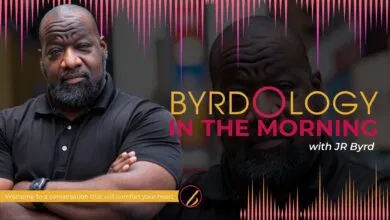
*J. Richard Byrd \ www.jrichardbyrd.com \ is a business development mentor, media strategist, and CEO of The ByrdOlogy Group. ByrdOlogy In the Morning is a 4‑minute daily leadership devotional available on YouTube, Spotify, and all major podcast platforms. \ www.BLKHustle.com/byrdologyinthemorning *
{“@type”:”BlogPosting”,”image”:”https://cdn.marblism.com/w178xT3iV6q.webp”,”author”:{“url”:”https://www.jrichardbyrd.com”,”name”:”J. Richard Byrd”,”@type”:”Person”},”@context”:”https://schema.org”,”headline”:”AI Summaries vs. Human Intuition: Which Is Better For Your Daily Strategy?”,”publisher”:{“logo”:{“url”:”https://cdn.marblism.com/w178xT3iV6q.webp”,”@type”:”ImageObject”},”name”:”ByrOlogy in The Morning”,”@type”:”Organization”},”description”:”Explore the tension between AI-generated data and human intuition in leadership. Learn how to balance technology with gut-feeling to drive a more effective daily strategy.”,”datePublished”:”2026-07-01″,”mainEntityOfPage”:{“@id”:”https://www.brownstoneworldwide.com/category/foundercircle/byrdology/”,”@type”:”WebPage”}}