
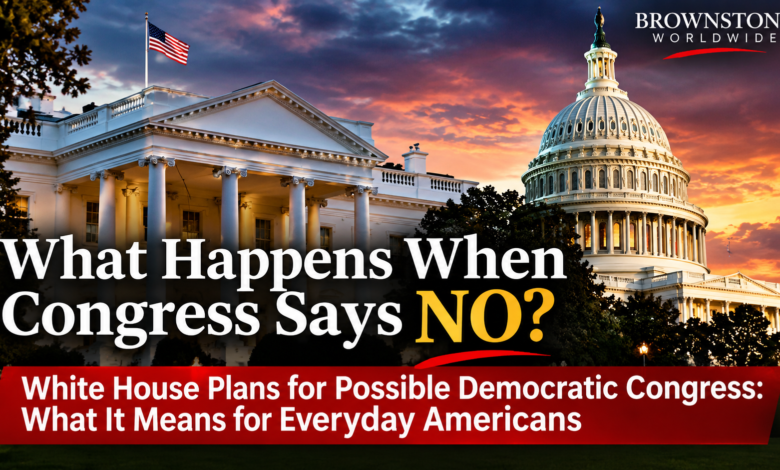
WASHINGTON, D.C. | November 2, 2026 — Americans will head to the polls Tuesday, November 3, to choose who represents them in Congress. But behind the scenes, President Donald Trump’s advisers have already been preparing for what happens if Democrats win control of the House, the Senate, or both.
According to a Reuters investigation published November 1, senior White House officials have spent months studying ways the president could continue carrying out policies without Congress passing new laws. Those involved reportedly include Stephen Miller, budget director Russell Vought, and White House counsel Will Scharf.
First, How Does Our Government Work?
Imagine the government as a school. The president is like the principal. Congress is like the school board. Courts are like referees who make sure everyone follows the rules.
The Constitution divides power among three branches. Congress makes laws and controls federal spending. The president carries out laws and leads the executive branch. Courts interpret the law and decide whether government actions are lawful. This system is called checks and balances.
So What Is the White House Planning?
Reuters reported that White House officials have worked since April on actions the president may be able to take even if Democrats control Congress. The areas include immigration, tariffs, housing and federal spending.
Stephen Miller: Government Policies
Miller has been involved in examining actions involving immigration, visas and trade. Some presidential powers already exist under laws Congress has passed. Others would require new legislation.
Russell Vought: Taxpayer Money
Vought oversees the Office of Management and Budget. Reuters reported that he has examined how the administration might use money Congress already approved and change government grant procedures. This matters because federal dollars help fund schools, infrastructure, healthcare and community programs. Congress controls federal appropriations, and the executive branch must follow the laws that govern spending.
Will Scharf and White House Lawyers: Legal Authority
The White House legal team is reportedly studying what the president can legally do without new legislation, how actions might be defended in court, and how administration officials should respond to potential congressional subpoenas and document requests. They have also explored whether executive privilege could apply to certain communications with private advisers. Executive privilege is not unlimited.
What Happens if Democrats Win Congress?
If Democrats gain the House or Senate, they could challenge presidential policies. Depending on the chamber, they could hold hearings, investigate agencies, reject proposed legislation, influence spending or block nominations. The president would still retain lawful executive powers and could veto bills. Courts could rule on disputes over presidential authority.
Why Should Families Care?
This is about who decides how government works. Congress may approve money for schools, roads, public health or community programs. The administration carries out those programs under the law. Changing how the money is used requires legal authority. Similar checks apply to immigration rules, tariffs and other policies that can affect household expenses and opportunities.
Does This Mean the White House Is Breaking the Law?
Not necessarily. Reuters documented the planning, but did not establish that every proposed action would be illegal. Presidents of both parties have relied on executive authority during disagreements with Congress. Planning legal options is not automatically improper. Specific actions can be challenged if they exceed constitutional or statutory limits.
The White House defended its policy agenda when asked about the planning and rejected the suggestion that Republican election losses were assured.
Why the November 3 Midterms Matter
Voters will choose lawmakers who can write laws, oversee federal spending and investigate government actions. The election does not remove all presidential powers, but it shapes the balance between Congress and the White House.
The Brownstone Bottom Line
Reuters reports that the White House is preparing for a Congress that might disagree with President Trump. His advisers are studying what the president can do without new laws and how to defend those decisions. But Congress retains important constitutional authority, and courts can review executive actions.
The central question is whether every branch of government respects the limits of its authority. Those rules matter regardless of which political party holds the presidency.
Know. Grow. Belong. — Brownstone Worldwide