

Trump Names Stephen Miller White House Chief of Staff, Replacing Susie Wiles After Midterm Defeat
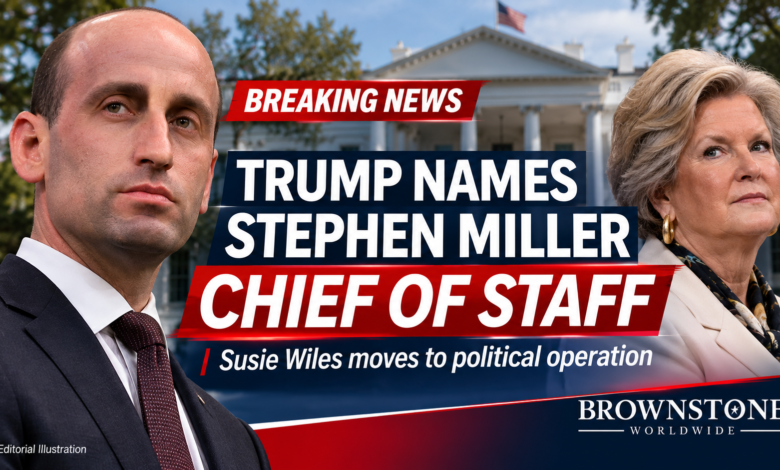
WASHINGTON — President Donald Trump announced Friday, November 6, that Stephen Miller will replace Susie Wiles as White House chief of staff beginning Monday, November 9, 2026. The change comes days after Republicans lost control of both chambers of Congress in the midterm elections.
The White House confirmed the appointment in an official announcement. Trump praised Wiles’ service and said she would move to his political operation. The president described Miller, currently deputy chief of staff, as one of his most trusted advisers.
Who is Stephen Miller?
Miller has been a central figure in Trump’s political circle for a decade and an architect of the administration’s hard-line immigration and deportation policies. As deputy chief of staff, he has played a major role in developing and coordinating domestic policy. His elevation places him at the center of White House staffing, access to the president, policy coordination and relations with federal agencies and Congress.
What happens to Susie Wiles?
Wiles became the first woman to serve as White House chief of staff. A veteran political strategist, she helped organize Trump’s successful return to the White House. Trump said she would continue working with his political organization rather than remain in the West Wing chief-of-staff role.
Why the timing matters
The personnel change follows a midterm election in which Democrats won control of the House and Senate. The incoming Congress is expected to pursue oversight of the Trump administration. Miller’s selection could signal a continued emphasis on confrontational immigration enforcement and executive policy rather than a moderation of the administration’s approach. That interpretation is a political assessment, not a formally announced change in policy.
What to watch next
- November 9: Miller’s scheduled start as chief of staff.
- Immigration: Whether enforcement priorities or operational directives change.
- Congressional oversight: How the White House responds to inquiries and investigations by the incoming Democratic majorities.
- White House staffing: Whether additional senior personnel changes follow.
The Brownstone perspective: What changes for the people?
The chief of staff is not elected by voters, but the position can significantly influence how presidential decisions are made and carried out. With a new Congress preparing to take office, the public should watch not just the personalities involved but the policies, legal challenges and oversight decisions that follow.
For the Neighborhood, the central question is whether the administration will respond to the midterm results by changing course or by reinforcing its existing agenda—and what either choice means for immigration, civil liberties, federal spending and accountability.