
If It All Falls Apart When You Rest, That’s the Real Problem
This morning, one thought landed harder than my first cup of coffee: if everything depends on me being available, I haven’t built a strong business. I’ve built a very demanding job with my name on it.
I’m writing this from sabbatical, which is a useful place to notice what happens when I step away. Not because absence is magic. Not because a leader should disappear and leave everyone else to guess. But because a planned pause can reveal what ordinary busyness hides.
The team keeps moving. Decisions get made. Work gets handled. And that is not proof that I don’t matter. It is proof that leadership should create more capacity than one person can carry.
That’s the point of rest as a discipline. It gives me room to recover, and it gives the organization a chance to show me where it’s strong, where it’s stretched, and where it still relies too much on me.
If it collapses, don’t blame the break
Let me say this plainly: if the business struggles the moment you step back, the answer isn’t automatically to cancel your time off. The answer is to look closely at the system.
Maybe a critical process lives only in your head. Maybe the team has responsibility without the authority to act. Maybe every decision, large or small, gets routed through you because that’s how things have always worked. Those aren’t signs that you’re indispensable. They’re signs that your organization has a dependency problem.
And that’s valuable to learn while the absence is planned, not during an emergency, when everyone is tired and the stakes are high.
I’m not talking about abandoning your team and calling it empowerment. A leader’s absence needs preparation: clear ownership, agreed boundaries, and a real person who can make decisions while you’re away. Otherwise, you haven’t created a healthy test. You’ve created confusion.
The goal is not to prove that the company can run without your care. It’s to build a company that doesn’t require your constant intervention to keep running.
A strong business can handle a quiet week
We sometimes mistake being needed for being effective. I know how easy it is to get pulled into the role of the answer person: someone brings a problem, I jump in, and the room relaxes. Quick fix. Everybody moves on.
Except that quick fix can teach the team to bring me the next problem, too.
When I’m the default answer, I may be solving today’s issue while quietly limiting someone else’s growth. The better leadership move is to help the team build the judgment to solve the next one. That means sharing context, talking through trade-offs, and letting people make decisions within clear guardrails.
This is the same principle behind a boundary: it protects the work that matters instead of letting every request claim your time. I’ve written before about why leadership without boundaries is a losing game. Rest belongs in that conversation. It is not a prize I earn after I have answered every message and carried every concern. It is part of how I stay clear enough to lead, and how I make room for others to lead, too.
The sabbatical is a leadership test, not a disappearing act
A sabbatical can teach two things at once: whether I can genuinely step away, and whether the organization is prepared for me to do it.
A study of nonprofit leadership sabbaticals found that time away often prompted leaders to share more decision-making and delegate major responsibilities more comfortably. The report surveyed a specific group of nonprofit leaders, so I won’t pretend those findings predict exactly what will happen in every business. But the lesson is useful: a leader’s absence can make room for other people to build real experience.
A CEO’s reflection on a sabbatical at ETR describes a similar shift: more shared problem-solving, fewer approvals that automatically went to the CEO, and clearer continuity planning.
That’s the opportunity. Not “Look, they can survive without me, so I’m irrelevant.” More like: “Look what becomes possible when I stop standing in the middle of every decision.”
And yes, the first time your team handles something differently than you would, you may feel the itch to jump in. Take a breath. Different does not automatically mean wrong. If the decision fits the agreed priorities and guardrails, letting it stand may be the most useful leadership you do that day.
Try this today: hand off one decision
You don’t need a three-month sabbatical to start building this muscle. You need one decision and one person.
First, name one decision only you currently make. Make it specific. “How we run the business” is too broad. “Approving routine client credits under a set dollar amount” is something a teammate can learn.
Then choose one person to train to make it. Explain what matters, what limits apply, and when to ask for help. Give them enough context to use judgment, not just a checklist that sends them back to you at the first unexpected turn.
You might say: “Here’s the outcome we’re protecting. Here are the boundaries. If the situation stays within those lines, you can decide. If it crosses them, bring me the options and your recommendation.”
Then let them do the work. Don’t ask for an update every hour just to soothe your own nerves. Don’t quietly take the decision back because their approach looks unfamiliar. Give the handoff enough room to become real.
Afterward, review what happened. What was clear? What was missing? What would help them handle the next decision with more confidence? That conversation turns a single delegation into stronger capacity.
This is also what protects your rest. If every decision remains locked inside your head, being away can feel impossible. But when knowledge, authority, and responsibility are shared, stepping back stops being a crisis and starts looking like sound leadership.
Rest is part of building something that lasts
Rest is not the opposite of ambition. It can be evidence that I’m building with enough intention to keep going, and that I trust the people I’ve brought into the work.
So I’m taking this sabbatical seriously. I’m not treating every quiet stretch as a gap I have to fill with another task. I’m paying attention to what runs well, what needs better support, and where my presence has become a shortcut instead of a necessity.
Here’s the question I’ll leave with you: What is one decision you can teach someone else to make this week?
Start there. Your next step toward a healthier business, and a more sustainable season of rest, may be a decision you stop keeping to yourself.
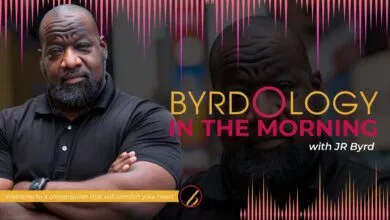
J. Richard Byrd \ www.jrichardbyrd.com \ is a business development mentor, media strategist, and CEO of The ByrdOlogy Group. ByrdOlogy In the Morning is a 4-minute daily leadership devotional available on YouTube, Spotify, and all major podcast platforms. \ www.BLKHustle.com/byrdologyinthemorning