

Samsung Names New Memory-Chip Leader as AI Demand Reshapes Its Business
November 20, 2026 — Samsung Electronics has named Hwang Sang-joon president and head of its memory-chip business, placing a former memory-development executive in charge as artificial-intelligence computing pushes demand for advanced semiconductors. The South Korean company also announced leadership changes across its logic-chip and mobile operations, according to Reuters.
Why the memory appointment matters
Memory chips are central to AI infrastructure. Powerful processors require fast access to large amounts of data, making memory capacity, bandwidth and production yields important factors in the economics of data centers. Samsung’s memory operations therefore sit at the intersection of consumer electronics, enterprise computing and the global AI investment boom.
The company said the appointment is intended to strengthen competitiveness in the AI era. That is a strategic objective, not proof that a management change will immediately translate into additional sales or market share. Reuters reported that Samsung’s third-quarter chip profit increased roughly fifteenfold as data-center construction contributed to tighter supplies and higher prices.
A wider management reshuffle
Co-chief executive Jun Young-hyun will continue overseeing the broader device-solutions division, including memory and logic chips, while emphasizing future businesses such as foundry manufacturing. Samsung also selected Cho Sang-yeun to lead System LSI, the business responsible for designing logic chips, and promoted Lee Jong-myeong to a technology leadership role in the division.
In mobile devices, Choi Won-joon was named the new leader after overseeing recent Galaxy product launches. Co-chief executive TM Roh remains responsible for the wider device-experience division, with robotics among the areas drawing attention.
What this means for businesses and creators
Semiconductor supply affects far more than technology investors. A shortage of advanced components can influence the cost of servers, cloud services, workstations and eventually the software subscriptions used by small businesses and independent media companies. Conversely, expanded production could ease constraints over time. Neither outcome is guaranteed by today’s announcement.
Samsung shares declined more than five percent during a broader technology selloff, Reuters reported. That market movement should be interpreted in its trading-day context rather than treated as a direct verdict on the executive appointments.
What to watch next
Industry observers will look for evidence of higher manufacturing yields, customer wins, delivery schedules and the company’s next earnings guidance. The bigger question is whether strong AI-related chip demand can be converted into durable profits without creating a costly oversupply cycle.
Source: Reuters, November 20, 2026.
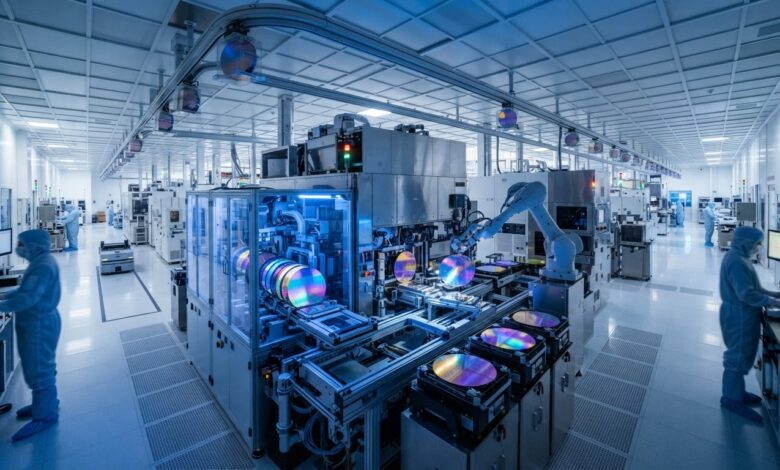
Featured image: original conceptual illustration, not a photograph of Samsung facilities.