Distraction Is a Decision You Keep Making
I woke up this morning at 5:15 AM, just like I do every day. The house was quiet, the coffee was brewing, and the air had that crisp, "anything is possible" feel to it. I sat down at my desk, ready to tackle a big strategy document that’s been staring me in the face for three days.
But then, I saw it.
The little red notification on my phone. Just one. A "quick" DM that I figured would take thirty seconds to answer.
An hour later, I was deep in a rabbit hole of real estate listings for houses I’m not buying, three YouTube shorts into a "day in the life" of a guy who lives in a van, and somehow, I was reading an argument about the best way to seasoning a cast-iron skillet.
My coffee was cold. My strategy document was still a blank white screen. And I caught myself saying the lie we all tell ourselves: "Man, I just got so distracted."
But that’s not true. I didn’t get distracted. I chose to be distracted.
And until you accept that distraction is a decision you keep making, you’re never going to own your time, your business, or your results.
The Myth of the "Hijack"
We love to blame the algorithms. We talk about how social media is "designed to be addictive" or how our phones are "hijacking our brains." And look, that stuff is real: there are teams of engineers in Silicon Valley making sure those apps hit your dopamine receptors like a slot machine.
But let’s be for real for a second. Your phone didn’t jump into your hand. The app didn’t open itself. You made a choice to reach, to click, and to scroll.
Every time you "just check real quick," you are making an executive decision. You are deciding that whatever is behind that screen is more important than the empire you claim you’re trying to build. You are deciding that a stranger's opinion or a cat video has more value than your focus.
Distraction doesn’t "happen" to you. It’s a series of micro-decisions you make because, deep down, you’re looking for an escape.
Why We Choose the Escape
Here’s the part that hurts: We choose distraction because the real work is uncomfortable.
That strategy document I was supposed to write? It’s hard. It requires me to think, to face the possibility that my plan might not work, and to deal with the uncertainty of the next quarter.
The DM, the YouTube shorts, and the cast-iron skillet debate? Those are easy. They give my brain a quick hit of "success" without any of the risk.
Distraction is often just an emotional escape hatch. We use it to avoid:
- Anxiety: "What if I ship this and nobody buys it?"
- Boredom: "This spreadsheet is tedious and I’d rather be entertained."
- Fear of Failure: "If I don't start the project, I can't fail at the project."
When you reach for your phone in the middle of a hard task, you’re not "losing focus." You’re actually doing a great job of managing your mood. You’re trading your long-term legacy for short-term comfort.
Is that a trade you’re really okay with?
The 24-Hour Focus Experiment
If you’re ready to stop being a victim of your own habits, I want you to try something for the next 24 hours. I call it the "Decision Audit."
From this moment until tomorrow at the same time, I want you to treat every single distraction as a formal business decision. Before you open a tab, check a text, or scroll a feed, I want you to say this out loud (or in your head if you're in a meeting):
"I am choosing to stop building my business right now so I can look at [X]."
"I am choosing to delay my goals so I can see what [Person] posted."
It sounds harsh, right? It should.
The goal isn't to never look at your phone. The goal is to make it a conscious choice. If you want to spend twenty minutes looking at memes, fine: decide to do it. Put it on the calendar. But don't let it "just happen" in the middle of your revenue-generating time.
You Choose the Level
At the end of the day, your focus is the only KPI that actually matters. You can have the best ByrdOlogy frameworks in the world, the best team, and the best product, but if you won't stay in the chair and do the work, none of it counts.
If you can choose distraction, you can choose focus.
The power is in the pivot. The next time you feel that itch to escape the hard thing, remember: You’re the CEO. Stop letting your impulses run the company.
Are you making decisions today that lead to the results you want? Or are you just making decisions that make you feel comfortable?
Move on purpose. Come home intact.
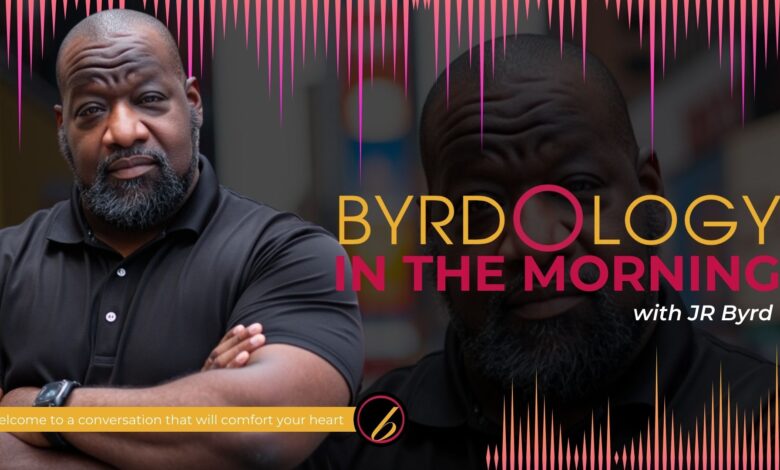
*J. Richard Byrd \ www.jrichardbyrd.com \ is a business development mentor, media strategist, and CEO of The ByrdOlogy Group. ByrdOlogy In the Morning is a 4-minute daily leadership devotional available on YouTube, Spotify, and all major podcast platforms. \ www.BLKHustle.com/byrdologyinthemorning *
{“@type”:”BlogPosting”,”image”:”https://cdn.marblism.com/w178xT3iV6q.webp”,”author”:{“url”:”http://www.jrichardbyrd.com”,”name”:”J. Richard Byrd”,”@type”:”Person”},”@context”:”https://schema.org”,”headline”:”Distraction Is a Decision You Keep Making”,”publisher”:{“logo”:{“url”:”https://cdn.marblism.com/w178xT3iV6q.webp”,”@type”:”ImageObject”},”name”:”The ByrdOlogy Group”,”@type”:”Organization”},”description”:”Stop telling yourself you ‘got’ distracted. Distraction is a series of choices we make to avoid the discomfort of the real work. Learn how to reclaim your focus.”,”datePublished”:”2026-06-10T06:00:00-04:00″,”mainEntityOfPage”:{“@id”:”https://www.brownstoneworldwide.com/category/foundercircle/byrdology/”,”@type”:”WebPage”}}