Leading Under Pressure: How to Stay Steady When the World Gets Loud
It was 5:14 AM. The house was dead quiet, but my head sounded like a crowded airport terminal.
I sat there, staring at a cooling cup of black coffee, holding my phone like it was a live grenade. A deal I’d been working on for six months: the kind of deal that shifts the trajectory of a company: had just developed a massive, jagged crack. One email had turned a "sure thing" into a "maybe not," and suddenly, the weight of the payroll, the expectations of my team, and the reputation I’d built were all pressing down on my chest.
When you’re the one everyone leans on, you don’t get the luxury of a meltdown. You don’t get to hide under the covers. You have to lead. But how do you stay steady when the volume of the world is turned up to eleven?
The Noise is a Liar
Here’s the first thing you need to realize when the pressure hits: The noise is a liar.
When things go sideways, your brain starts firing off "what-if" scenarios like a malfunctioning sprinkler system. What if we lose the client? What if I have to let people go? What if they realize I’m just figuring this out as I go?
That noise isn’t data. It’s fear dressed up as a forecast.
As a leader, your primary job in a crisis isn't actually solving the problem: at least not at first. Your primary job is managing your own state. If you’re vibrating at the same frequency as the chaos, you’re not leading; you’re just part of the wreckage.
The 90-Second Reset
I’ve learned that there is a massive difference between a reaction and a response.
A reaction is what happens when you let the pressure pull the trigger. It’s the snappy email you regret five minutes later. It’s the "all-hands" meeting called in a panic that leaves your team feeling more unstable than they did before.
A response, however, is calculated. It’s intentional.
Whenever the stakes get high, I use what I call the 90-Second Reset. I put the phone down. I stop looking at the screen. I breathe: actually breathe: and I ask myself one question: “What is the one thing that is actually true right now?”
Not what I think might happen. Not what I’m afraid will happen. Just the facts.
In that early morning crisis, the fact wasn't "I’m going to fail." The fact was "The terms of the agreement have changed, and I need to gather more information." Once you isolate the facts, the noise starts to fade. You stop being a victim of the circumstances and start being the architect of the solution.
Be the Rock, Not the Echo
Your team is watching you. They aren't just looking at the charts or the bank balance; they are looking at your face. They are reading your tone.
If you’re frantic, they’ll be frantic. If you’re steady, they’ll find their footing.
Leadership under pressure requires you to be the rock in the middle of the stream. The water can rush, it can foam, it can roar: but the rock doesn't move. You provide the stability that allows everyone else to do their jobs.
This doesn't mean you lie. It doesn't mean you pretend everything is perfect. Authenticity is your greatest currency. I’ve found that saying, "Look, this is a tough situation, and we don't have all the answers yet, but here is exactly what we are doing next," builds more trust than a fake "everything's fine" smile ever could.
Decision Making with "Two-Way Doors"
In a high-pressure environment, the temptation is to wait for perfect clarity. You want more data. You want a guarantee.
But in leadership, "perfect" is the enemy of "done." Waiting too long is its own kind of decision: and usually a bad one.
I like to use the "Two-Way Door" framework. Most decisions are two-way doors; if you walk through and it’s not right, you can turn around and come back out. These are reversible. When the world is loud, make these decisions fast. Move the needle. Keep the momentum.
The "One-Way Doors": the decisions that are permanent or extremely costly to reverse: those are the ones where you slow down. You pull in your mentors. You double-check your assumptions.
Recognizing the difference keeps you from getting paralyzed by the weight of the moment.
The Morning Clarity
That morning, after my reset, I didn't send a panicked email. I didn't wake up my partners with a frantic call. I finished my coffee. I looked at the facts. I realized the "crack" in the deal was actually an opportunity to renegotiate a term that had been bothering me anyway.
By the time the first meeting of the day started, I wasn't the guy who was "handling a crisis." I was the leader with a plan.
Pressure is a privilege. It means you’re in the game. It means what you’re doing matters. But don't let the weight of the responsibility steal your peace.
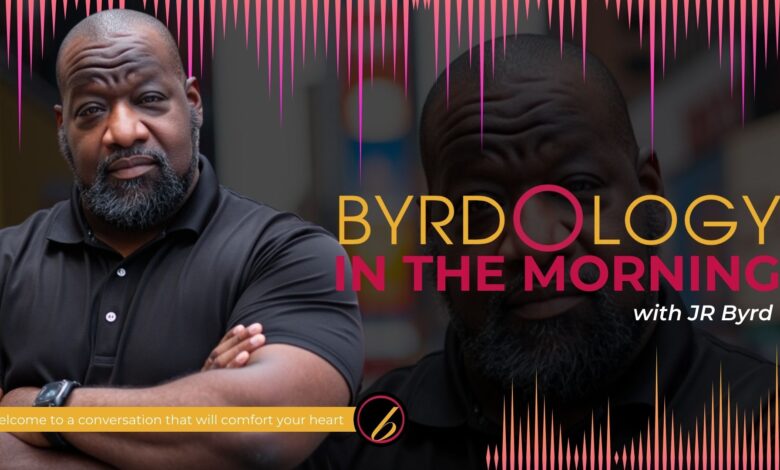
One of the reasons we do ByrdOlogy In the Morning is to give you those four minutes of clarity before the noise starts. It’s about getting your mind right so that when the world gets loud, your internal compass stays true.
You’re the one everyone leans on. Make sure you’ve got something solid for them to lean against.
The Move to Make Today:
Identify the "noise" in your current biggest challenge. Write down three facts: not feelings: about the situation. Decide which of your next steps is a "two-way door" and walk through it.
How are you staying steady today?
J. Richard Byrd \ www.jrichardbyrd.com \ is a business development mentor, media strategist, and CEO of The ByrdOlogy Group. ByrdOlogy In the Morning is a 4‑minute daily leadership devotional available on YouTube, Spotify, and all major podcast platforms. \ www.BLKHustle.com/byrdologyinthemorning
{“@type”:”BlogPosting”,”image”:”https://cdn.marblism.com/w178xT3iV6q.webp”,”author”:{“url”:”https://www.jrichardbyrd.com”,”name”:”J. Richard Byrd”,”@type”:”Person”},”@context”:”https://schema.org”,”headline”:”Leading Under Pressure: How to Stay Steady When the World Gets Loud”,”publisher”:{“logo”:{“url”:”https://cdn.marblism.com/w178xT3iV6q.webp”,”@type”:”ImageObject”},”name”:”ByrdOlogy in The Morning”,”@type”:”Organization”},”articleBody”:”It was 5:14 AM. The house was dead quiet, but my head sounded like a crowded airport terminal. I sat there, staring at a cooling cup of black coffee, holding my phone like it was a live grenade. A deal I’d been working on for six months—the kind of deal that shifts the trajectory of a company—had just developed a massive, jagged crack… (truncated for brevity in schema)”,”description”:”Learn how to maintain leadership stability and make high-stakes decisions when facing intense business pressure. A guide for entrepreneurs to lead with clarity.”,”datePublished”:”2026-07-12″}