The Cost of “Later”: Why Speed is a Leadership Standard
The clock hit 4:12 AM today. Usually, that’s my time for silence, but the silence felt loud this morning. I was sitting there, steam rising from a cup of coffee that was definitely stronger than it needed to be, and I caught myself thinking about a project I’ve been "meaning to get to" since last Tuesday.
I told myself I’d do it later.
Then I realized: "Later" is the most expensive word in the entrepreneur’s dictionary. It’s not just a delay; it’s a tax. It’s a high-interest loan you take out against your future self, and the interest rate is compounded by every competitor who is willing to move while you’re still "considering the options."
If you’re leading a team, a company, or even just leading yourself through a hard season, you need to understand something fundamental: Speed isn’t just a habit. It’s a leadership standard.
The Myth of the Perfect Moment
We’ve been sold this lie that leadership is about being the person who has all the answers and makes the "perfect" choice after exhaustive deliberation. We wait for the data to be 100% clear. We wait for the team to be 100% aligned. We wait for the market to be 100% stable.
But while you’re waiting for 100%, the guy down the street just moved at 70%. He’s already broken things, fixed them, and gathered real-world data while you’re still staring at a color-coded spreadsheet.
I remember early in my career, I had this idea for a media strategy that I knew: deep in my gut: would shift the needle for a client. I spent three weeks polishing the presentation. I wanted the fonts to be right. I wanted the transitions to be seamless. I wanted to anticipate every single "what if."
By the time I walked into that meeting, the client looked at me and said, "Rich, that’s a great idea. We actually just signed a contract with a firm that pitched us a version of this last Wednesday."
They didn’t have a better idea. They just had a faster clock.
That was the day I realized that the "Cost of Later" isn't just a missed opportunity: it’s the slow erosion of your authority. When you move slowly, you teach your team that urgency doesn't matter. You teach your market that you aren't the one to call when things get heavy. You basically hand over your standards over motivation to whoever is willing to sweat the details in real-time.
Shrinking the Gap
The most successful leaders I know have one thing in common: they have a terrifyingly small gap between an idea and an execution.
Think about your own life right now. What’s that one thing sitting on your "later" list? Maybe it’s a difficult conversation with a director. Maybe it’s a pivot in your marketing spend. Maybe it’s finally launching that podcast or cleaning up your entrepreneur reset framework.
Every day that idea sits in your head without a corresponding action, its value drops. It’s like a new car: the moment you drive it off the lot of "inspiration" and park it in the garage of "procrastination," it loses 20% of its worth.
Speed is a competitive advantage because most people are fundamentally afraid to be wrong. They think that by moving slowly, they are being "diligent." In reality, they are usually just being scared.
Speed forces you to be brave. It forces you to trust your intuition. It forces you to protect your focus because you don't have time to get distracted by the noise.
Move Like the Owner, Not the Employee
There is a distinct difference in how an owner moves versus how an employee moves.
An employee waits for permission. An employee waits for the "all-clear" signal. An employee waits to be told that it’s okay to take the risk.
An owner? An owner knows that they are the permission.
When you "move like the owner," you realize that the cost of a mistake made quickly is almost always lower than the cost of a success achieved too late. If you move fast and fail, you have time to pivot. If you move slowly and fail, you’re just out of time.
This isn’t about being reckless. It’s about being decisive. It’s about realizing that you can't lead well from an empty morning if that morning is filled with the ghosts of decisions you should have made yesterday.
The Framework: The 24-Hour Move
If you want to turn speed into a standard, you need a framework. You can't just tell yourself to "go faster." You need a rule.
Here’s mine: The 24-Hour Move.
Whenever a high-level strategic idea hits or a critical decision lands on my desk, I give myself exactly 24 hours to make the first move. Not to finish the project: to make the first move.
- If it’s a new partnership: Send the email within 24 hours.
- If it’s a change in the budget: Execute the first line item within 24 hours.
- If it’s a correction in the culture: Have the first 5-minute "check-in" within 24 hours.
This breaks the back of procrastination. It stops the "Later" tax from accumulating. It signals to your brain: and your team: that we are an organization that values momentum over perfection.
The Invisible Battle
Leadership is often an invisible battle fought before the first meeting even starts. It’s a battle of the will. It’s about choosing to do the hard thing now so that you don’t have to do the impossible thing later.
When we talk about ByrdOlogy, we talk about "morning clarity." That clarity isn't just for your soul; it's for your execution. It’s about looking at your to-do list and identifying the one thing you’ve been protecting with the word "later" and realizing that "later" is just a polite way of saying "never."
If you lead people, they are watching your pace. If the leader is moving at a jog, the team is walking. If the leader is walking, the team has sat down to take a nap. Your speed sets the tempo for the entire culture.
So, ask yourself: Is your current pace reflective of where you want to be in six months? Or are you paying a massive "Later Tax" that is keeping you stuck in the same place you were last quarter?
Your Move Today
I want you to pick one thing. Just one.
Don't pick the biggest project on your plate. Pick the one that has been sitting there the longest. The one you’ve "later-ed" into oblivion.
Go do the first 10% of it right now. Before the next meeting. Before the next cup of coffee. Before you talk yourself out of it.
The gap between where you are and where you want to be is paved with the things you said you’d do "later." Shrink the gap. Increase the speed. Set the standard.
And then, come home intact knowing you didn't leave your best moves on the shelf.
What is the one move you’ve been delaying that, if done today, would change the momentum of your entire week?
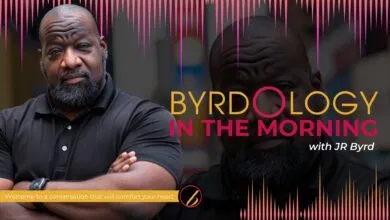
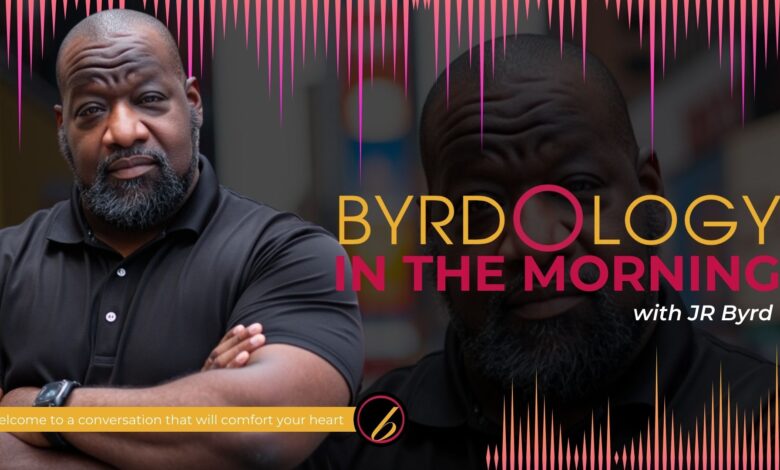
J. Richard Byrd \ www.jrichardbyrd.com \ is a business development mentor, media strategist, and CEO of The ByrdOlogy Group. ByrdOlogy In the Morning is a 4‑minute daily leadership devotional available on YouTube, Spotify, and all major podcast platforms. \ www.BLKHustle.com/byrdologyinthemorning
{“@type”:”BlogPosting”,”image”:”https://cdn.marblism.com/w178xT3iV6q.webp”,”author”:{“url”:”https://www.jrichardbyrd.com”,”name”:”J. Richard Byrd”,”@type”:”Person”},”@context”:”https://schema.org”,”headline”:”The Cost of \”Later\”: Why Speed is a Leadership Standard”,”publisher”:{“logo”:{“url”:”https://cdn.marblism.com/w178xT3iV6q.webp”,”@type”:”ImageObject”},”name”:”The ByrdOlogy Group”,”@type”:”Organization”},”description”:”Explore why speed and shrinking the gap between idea and execution are essential leadership standards for modern entrepreneurs.”,”datePublished”:”2026-07-12″,”articleSection”:”Leadership & Business Strategy”}