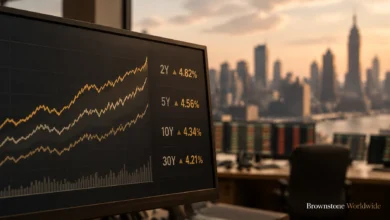
Markets see Fed’s next move as potential hike as oil prices, inflation fears rise

The recent surge in energy prices, escalating import costs, and growing concerns about stagflation have sparked speculation that the Federal Reserve may be considering a rate hike in the near future. Market traders have pushed the probability of a rate increase by the end of 2026 to 52%, crossing the 50% threshold for the first time, according to the CME Group FedWatch tool.
This shift in market sentiment comes as global benchmark crude prices have surpassed $110 per barrel, signaling potential inflationary pressures as the Iran war continues and U.S. tariffs drive up costs. In addition, the Bureau of Labor Statistics reported a significant increase in import prices by 1.3% in February, the largest monthly gain since March 2022, while export prices rose 1.5%, the biggest increase since May 2022.
Furthermore, the Organization for Economic Cooperation and Development has raised its forecast for U.S. inflation this year to 4.2%, well above the Fed’s expectations of 2.7%. These inflation concerns have coincided with heightened fears of a looming recession, with Wall Street economists predicting a near 50% chance of an economic downturn within the next 12 months.
Despite these challenges, Federal Open Market Committee Vice Chair Philip Jefferson emphasized in a recent speech that the recent developments do not necessarily warrant an immediate rate hike. He noted that the uncertainty surrounding tariffs and oil prices complicates the Fed’s dual mandate of maximum employment and price stability, posing risks to both the labor market and inflation.
While market pricing indicates minimal chances of a rate cut, the FOMC is scheduled to meet on April 28-29 to discuss the current economic landscape. Although the majority of market participants are expecting the Fed to maintain its current policy stance, with only a 6.2% probability of a rate hike, the ongoing inflationary pressures and recession concerns may prompt a reevaluation of monetary policy in the coming months.
In conclusion, the evolving economic conditions, including surging energy prices, rising import costs, and mounting inflationary pressures, have raised speculation about a potential rate hike by the Federal Reserve. While market expectations remain divided, the central bank’s upcoming meeting will provide further insights into its response to the current challenges facing the U.S. economy.