

Nobody Chose the Big Light
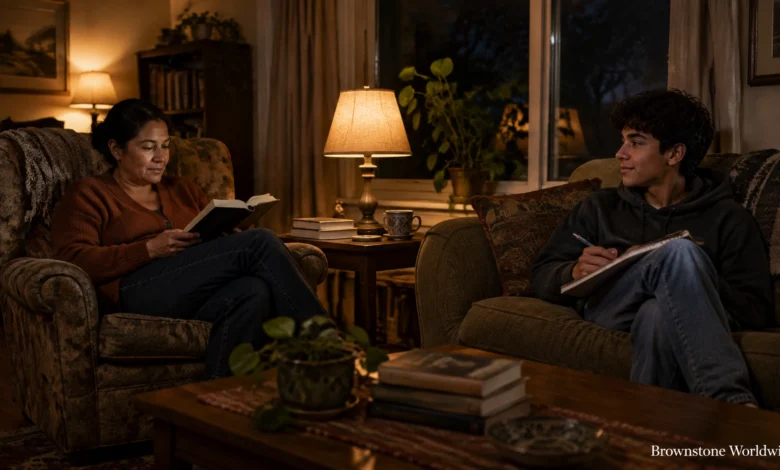
Walk into most living rooms after dark and the first thing anyone does is hit the switch by the door, and the whole room goes flat and white. We treat that as normal. It is not a decision anybody in the house actually made.
Deborah Sugg Ryan, a professor of design history, has traced where the single ceiling pendant came from, and the answer is money. In the nineteen-twenties, copper was expensive and so was wiring a house, so builders ran one fixture per room instead of several. They put it where the gas light hung, because that is where people already expected light. A century later we are still flipping a switch for a compromise nobody remembers making.
That matters more in the darker months, when the overhead light stays on for hours and the room has to be pleasant, not just visible. Designers point out what one bright source in the center does. It flattens faces, drops shadows straight down, and makes a small room feel like a waiting area. Light from the edges does the opposite. A lamp on a table, a glow behind a chair, a soft wash on a wall, and the room suddenly reads as deeper and warmer than it did before.
You probably already own what you need. Before buying anything, try one evening with the big light off. Switch on the two or three smaller lamps you have, wherever they happen to be sitting, and move one closer to the chair where you actually sit. If a corner is still dim, that is where the next one goes. The goal is not a perfect scheme. It is light at the height of your face instead of light at the top of your head.
Leave it that way for a week and notice how the room feels at eight in the evening. My guess is you stop reaching for the switch out of habit.
What is the one room in your house that has never felt right after dark, and what is actually doing the lighting work in there?