U.S. completes strikes on multiple Iranian targets after Hormuz Strait ship attacks, Centcom says

An F/A-18F Super Hornet, attached to Strike Fighter Squadron (VFA) 41, prepares to launch from the flight deck of Nimitz-class aircraft carrier USS Abraham Lincoln (CVN 72).
Courtesy: U.S. Navy
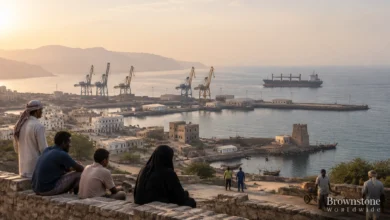
The United States carried out retaliatory strikes against Iran on Tuesday in response to Tehran’s attacks on three commercial vessels in the Strait of Hormuz, according to U.S. Central Command.
Centcom announced that over 80 targets were hit, including air defense systems, command and control networks, and anti-ship missile capabilities. Additionally, more than 60 Islamic Revolutionary Guard Corps’ small boats were targeted to diminish Iran’s ability to disrupt international commerce.
While it remains unclear if Iran has retaliated, Bahrain’s interior ministry has advised civilians to seek refuge in safe locations.
In a previous statement, Centcom stated that the strikes were intended to impose consequences for Iran’s aggression towards commercial vessels in international waters.
“The U.S. strikes were carried out in response to Iranian attacks on three commercial ships passing through the Strait of Hormuz. Iran’s actions were unwarranted, dangerous, and a violation of the ceasefire.”
The recent military actions by the U.S. and Iran threaten to escalate tensions in the region and raise concerns about the potential closure of the Strait of Hormuz. Previous conflicts between the two nations have led to spikes in global oil prices, impacting inflation worldwide.
This latest exchange follows a series of clashes last month triggered by Iranian assaults on commercial vessels in the strait, a vital maritime passage that Iran had blocked earlier this year. Both parties had agreed to de-escalate tensions following the previous incidents, as negotiations to end the conflict were underway.
In June, Washington and Tehran reached a memorandum of understanding to halt hostilities and reopen the Strait of Hormuz. The recent U.S. retaliatory strikes now challenge the sustainability of this agreement, which had managed to withstand previous confrontations.
Mohammad Bagher Ghalibaf, the speaker of Iran’s parliament, criticized the U.S. for violating the MOU by issuing threats of further military actions. “The era of intimidation and coercion is over. It leads to nowhere. We will not yield,” he declared on X.
Tensions escalated after Iran’s recent attacks on vessels in the strait, prompting the U.S. to revoke a sanctions waiver on Iranian oil earlier this week. Consequently, oil prices surged in response to the escalating situation.
The conflict between the U.S. and Iran began on February 28 with airstrikes by the U.S. and Israel that resulted in the death of Ayatollah Ali Khamenei, Iran’s leader.
President Donald Trump has emphasized that the primary objective of the conflict is to prevent Iran from acquiring nuclear weapons, a key topic of discussion under the MOU.
Currently, Trump is attending the NATO summit in Ankara, Turkey, where he is engaging with leaders of the transatlantic alliance. Turkey shares a border with Iran.