
Rest Is a Discipline Too
This morning, I looked at my November calendar and felt two things at once: relief, and the immediate urge to fill the open space.
That’s how I know this sabbatical is going to ask something of me.
I’m used to moving. Building, answering, planning the next thing. When people count on you, stopping can feel less like rest and more like letting somebody down. But I’m learning to question that feeling. Sometimes the most responsible thing a leader can do is step back before exhaustion makes the decision for them.
This month, I’m choosing rest on purpose. Not because the work doesn’t matter. Because it does.
Rest isn’t the prize at the finish line
A lot of us treat rest like a trophy. First, finish the work. Answer the messages. Fix the thing that broke. Take care of everybody else. Then, if there’s time, and if nothing else catches fire, we can rest.
You know how that goes. The finish line moves.
There’s always another email, another decision, another person who needs a piece of your attention. If rest only comes after the work is done, rest doesn’t come. It gets pushed to next week, next month, or that magical season when life finally becomes easy.
I’m not counting on that season showing up.
Rest is not a bonus you earn for being productive. It’s part of the work of being a person who leads, builds, decides, and shows up for others. It is maintenance. And maintenance isn’t what you do after the wheels fall off. It’s how you keep them on.
That doesn’t mean every break will make you instantly refreshed or that a weekend away fixes a workload that’s too heavy. It means our energy and judgment need care, just like the things we expect to keep working.
Research on entrepreneurs has made this point in a way I recognize: daily recovery experiences were associated with better wellbeing and less burnout. Relaxation and a sense of control mattered; mentally detaching from work could be especially difficult. The study, published in Small Business Economics, looks directly at entrepreneurs’ daily recovery.
That last part feels familiar. You can leave the office and still carry the office around in your head.
The myth of the leader who never stops
There’s a certain kind of praise we hand out to people who never seem to stop. “Always on.” “All-in.” “You can count on them.”
I’ve worn that badge. Maybe you have, too.
But “always on” can become another way of saying, “I haven’t built a system that can function without me.” And that isn’t a leadership flex. It’s a warning light.
When I refuse to pause, I don’t magically become more capable. I get less patient. I make ordinary decisions feel heavier. I can be physically present in a conversation while my mind is still answering an email that nobody sent yet.
That’s not my best work. It’s work happening with the tank low.
A study of employees’ daily recovery strategies found that detachment, relaxation, and control over nonwork time were connected with reduced stress and negative affect; autonomy also predicted better next-day self-rated performance. The research is available through the Journal of Business and Psychology. It doesn’t mean a day off turns anyone into a superhero. It does reinforce something practical: recovery belongs in the conversation about doing good work, not outside it.
And let’s be clear: rest isn’t a substitute for fixing impossible workloads, unclear expectations, or a team that’s stretched too thin. Individual recovery matters, but leaders also have to look honestly at the conditions people are working under. If every week requires heroic effort, the answer can’t always be “try harder to relax.”
Why stopping feels so hard
For someone built like me, stopping can bring up a whole committee of objections:
What if something needs me? What if I lose momentum? What if people forget I’m here? What if I come back behind?
That committee sounds responsible. Sometimes it’s just fear with a clipboard.
The truth is, taking a sabbatical doesn’t mean I stop caring about the work. It means I’m making room to return with more of myself available to it. And it means trusting that good work should not depend on one person being permanently reachable.
That trust takes practice. So does letting a message wait. So does asking, “Does this actually need me, or am I just used to being the answer?”
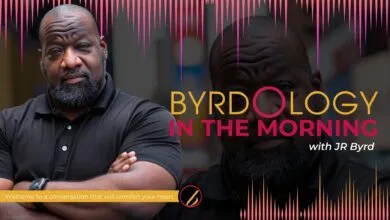
The ByrdOlogy in the Morning archive is built around the kinds of questions leaders have to face before the day gets loud. This month, I’m adding one to the list: What would it look like to protect the person doing the work, not just the work itself?
Put rest on the calendar first
Here’s the move I’m practicing: put rest on the calendar before work fills the space.
Not the leftover hour. Not the imaginary day when nothing urgent happens. Pick the time first. Give it a name. Protect it with the same respect you’d give a meeting with someone you don’t want to disappoint.
Start small if that’s what’s realistic:
- Block one evening when work is done at a set time.
- Take a real lunch break away from your inbox.
- Choose one day or half-day each week when you’re not catching up.
- Before time off, tell your team what counts as urgent, and who owns the other decisions.
- Turn off the notifications that turn every quiet moment into an invitation back to work.
A calendar block won’t solve every boundary problem. But it makes your intention visible. And visible intentions are easier to defend than vague promises to “slow down sometime.”
For me, the important part is putting rest on the calendar before the week gets crowded. If I wait to see what’s left, I know what I’ll find: not much.
Rest can be part of ambition
I still have drive. I still care about building, serving, and showing up strong. Rest doesn’t cancel ambition; it helps me question what kind of ambition I’m practicing.
Am I building something sustainable, or proving I can run myself into the ground?
Am I leading with clarity, or just staying in motion because motion looks like progress?
This sabbatical is an invitation to get honest about those questions. I don’t expect to come back with every answer. I do expect to come back having made room to hear myself think.
So if you’re the person everybody leans on, consider this your reminder from the corner: you’re allowed to protect your capacity before it becomes a crisis. You don’t have to wait until your body, your relationships, or your work force you to stop.
Make the time. Name the boundary. Let something wait.
What is one block of rest you can put on your calendar before the work takes it?
J. Richard Byrd \ www.jrichardbyrd.com \ is a business development mentor, media strategist, and CEO of The ByrdOlogy Group. ByrdOlogy In the Morning is a 4-minute daily leadership devotional available on YouTube, Spotify, and all major podcast platforms. \ www.BLKHustle.com/byrdologyinthemorning