

NASA Mars Simulation Crew Emerges After 378 Days: Why a Year in Isolation Matters
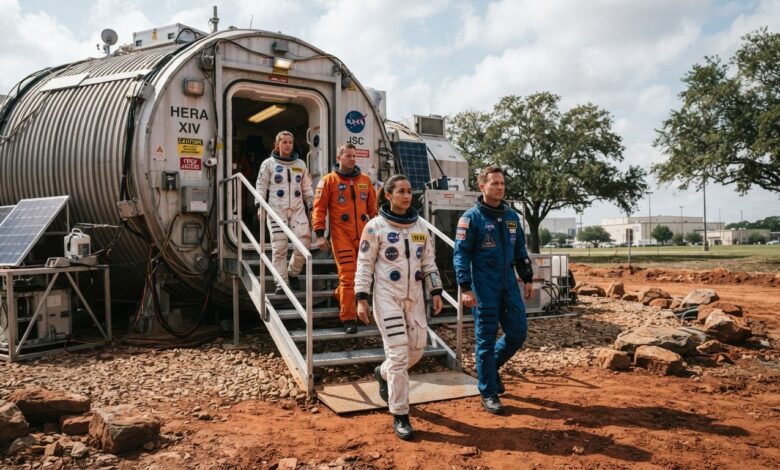
HOUSTON | November 2, 2026 — A crew of four volunteers emerged from a simulated Mars habitat after 378 days of living and working in isolation at NASA’s Johnson Space Center, Reuters reported. The mission was designed to explore the challenges humans could face during long journeys beyond Earth.
What did they do inside?
The mission was part of NASA’s Crew Health and Performance Exploration Analog, known as CHAPEA. Volunteers followed a structured schedule inside a Mars-like living environment, managing tasks that simulated the physical and psychological demands of a long-distance space mission.
Why simulate Mars on Earth?
Traveling to Mars would require astronauts to live in confined quarters for long periods, far from immediate help and familiar routines. Researchers can study teamwork, food systems, maintenance, workload and stress before sending real crews into space.
What happens next?
Scientists will review the mission’s data to improve planning for future exploration. Finishing the simulation does not mean NASA has announced a date for astronauts to land on Mars.
The Brownstone Bottom Line
Space exploration relies on people as much as rockets. Understanding how crews work, rest and solve problems in isolation could help improve safety during future missions—and offer lessons for remote work and emergency preparedness on Earth.