
Supreme Court Rejects Emergency Bid to Set Aside 20,000 California Mail Ballots
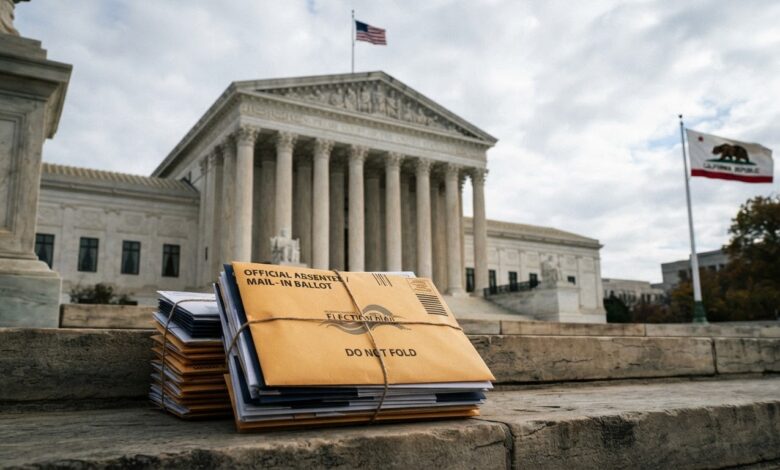
WASHINGTON | November 2, 2026 — The U.S. Supreme Court declined an emergency request from the Trump administration to require California officials to set aside mail ballots connected to roughly 20,000 people on a federal list of suspected noncitizens.
What was the dispute?
Justice Department officials said they wanted the ballots separated until citizenship questions could be reviewed. California officials challenged the accuracy of the list and warned it could include eligible U.S. citizens. A lower court found that separating votes at this late stage could cause serious disruption and risk denying lawful votes.
What the court did—and didn’t do
The Supreme Court refused to grant the emergency relief before the November 3 election. The decision does not prove every listed person is eligible or ineligible, nor does it settle every issue in the broader litigation. An allegation about voter status is not proof that a particular ballot was illegal.
What it means
State officials will continue administering voting under existing procedures without the emergency separation order requested in this case. Election officials and courts are balancing lawful election enforcement against preventing eligible voters from being excluded.
Source
Associated Press — Supreme Court and election-eve developments