
Trump Administration Weighs Narrower Workplace Protections for Pregnancy and Reproductive Health
WASHINGTON | November 3, 2026 — The Trump administration is preparing changes to federal rules that help workers obtain adjustments at work for pregnancy, childbirth and related medical conditions. The possible revisions could narrow explicit coverage of some reproductive health conditions, according to reporting published November 2 by The New York Times. The changes are under consideration, not a final rule that has taken effect.
What is the Pregnant Workers Fairness Act?
Congress passed the bipartisan Pregnant Workers Fairness Act in 2022, and it took effect in June 2023. It generally requires covered employers to make reasonable changes for qualified workers whose ability to work is affected by pregnancy, childbirth or related medical conditions, unless the changes would cause undue hardship.
For example, an employee may need extra bathroom or water breaks, a temporary lifting restriction, schedule adjustments or time for prenatal medical appointments. These are called reasonable accommodations.
What does the administration want to change?
The Equal Employment Opportunity Commission, or EEOC, is reviewing how its regulations define conditions related to pregnancy and childbirth. The agency’s publicly listed regulatory agenda identifies a proposed revision to the wording and interpretation of “pregnancy, childbirth, or related medical conditions.” It anticipates a proposal in November 2026, with a public comment period tentatively ending in January 2027. The timetable is an agency projection, not a guarantee.
According to the November 2 reporting, officials are considering removing some explicit references to reproductive-health conditions such as fertility treatment, menstruation and endometriosis. The review also involves questions about abortion-related care and possible religious exemptions for employers. The precise text of a new proposed rule had not been issued in the reports reviewed. The current regulations also address conditions such as miscarriage, postpartum depression and lactation; it is important not to assume every one of those protections will be removed.
Why does this matter to working women?
Consider someone working a job that requires standing for long hours or lifting heavy boxes while pregnant. A reasonable accommodation might mean being allowed to sit periodically or temporarily avoid heavy lifting. A worker recovering from childbirth or receiving certain reproductive healthcare may also need a change in duties or schedule.
If federal regulations become narrower, some employees and employers could face more uncertainty about which conditions qualify. That can especially matter for workers who do not have flexible schedules or generous paid leave.
Why are officials considering revisions?
EEOC Chair Andrea Lucas has questioned whether the existing regulations interpret the law too broadly by covering reproductive conditions beyond pregnancy itself. An EEOC spokesperson told reporters that Lucas remains committed to enforcing protections for pregnant employees. Supporters of narrowing the rules argue that agencies should stay within the limits Congress set.
Critics, including former EEOC officials involved in the regulations, warn that removing specific conditions could leave employees without clear guidance and make it harder for them to keep working while seeking medical care.
Are current protections already gone?
No. A proposed rule does not immediately change a federal law. The Pregnant Workers Fairness Act remains in place. Any final EEOC rule would also have to follow applicable administrative procedures and could be challenged in court. Separate state laws and other federal anti-discrimination and disability protections may apply depending on a worker’s circumstances.
The Brownstone Bottom Line
The debate is not simply whether pregnancy protections exist. It is about which medical conditions qualify for workplace accommodations and how clearly those rights are explained to workers and employers. The decisions could affect whether someone can continue working safely while managing pregnancy, recovery, fertility treatment or other health needs.
Workers with questions about current rights can review the EEOC’s Pregnant Workers Fairness Act guidance and seek individualized legal advice when needed.
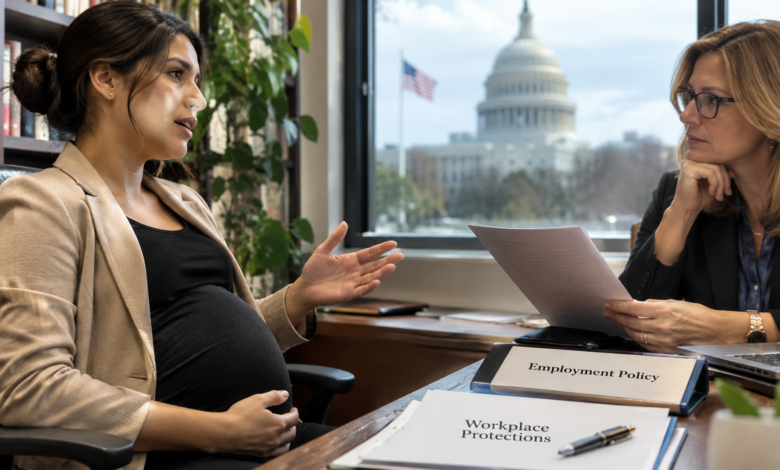
Featured image: Brownstone Worldwide original AI-generated editorial illustration; not an actual photograph of a workplace meeting.
Know. Grow. Belong. — Brownstone Worldwide