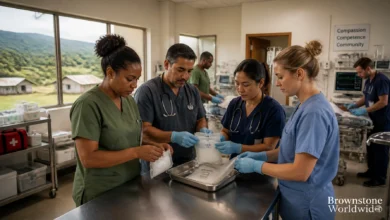
Delays in visa program threaten placement of hundreds of doctors in underserved areas

The United States is facing a critical issue as hundreds of foreign doctors who are on the verge of completing their training may have to leave the country if their visa waiver applications are not processed in a timely manner. These doctors, who are not U.S. citizens, are part of a program run by the Department of Health and Human Services that allows them to stay in the country while transitioning to temporary worker status in exchange for working in underserved areas for at least three years.
The delay in processing these visa waiver applications has created a backlog, leaving many doctors in limbo. Without timely approval, these physicians will have to return to their home countries by July 30, disrupting healthcare services in many underserved areas across the country. The situation is particularly dire for healthcare facilities in rural and low-income urban communities that rely heavily on foreign-born professionals to fill critical healthcare positions.
The delays in the visa waiver program are also compounded by a new $100,000 fee associated with the H-1B work visa, which applies to workers in all fields living outside the U.S. This fee has created additional financial burdens for healthcare employers, especially those in underserved areas, making it difficult for them to sponsor foreign physicians.
Efforts are being made by physicians, hospital leaders, lawmakers, and immigration experts to address these challenges. Lawmakers have introduced a bill to create a healthcare exemption to the H-1B fee, and several lawsuits are seeking to end the fee entirely. Additionally, calls have been made for emergency measures to expedite the processing of visa waiver applications for physicians with contracts to start work this summer.
The delays in the visa waiver program are not only causing uncertainty for foreign doctors but also posing a significant risk to patient care in underserved communities. As the deadline looms, healthcare facilities are facing the possibility of losing valuable healthcare professionals who are essential to providing quality care to vulnerable populations.
In the midst of these challenges, some foreign physicians are considering opportunities in other countries, such as Canada, where they may find more favorable conditions for practicing medicine. The situation highlights the need for urgent action to address the visa processing delays and ensure that healthcare facilities have access to the skilled professionals they need to meet the growing demand for healthcare services.