FDA Clears Robotic Blood-Draw Device : No More Repeated Pricks?
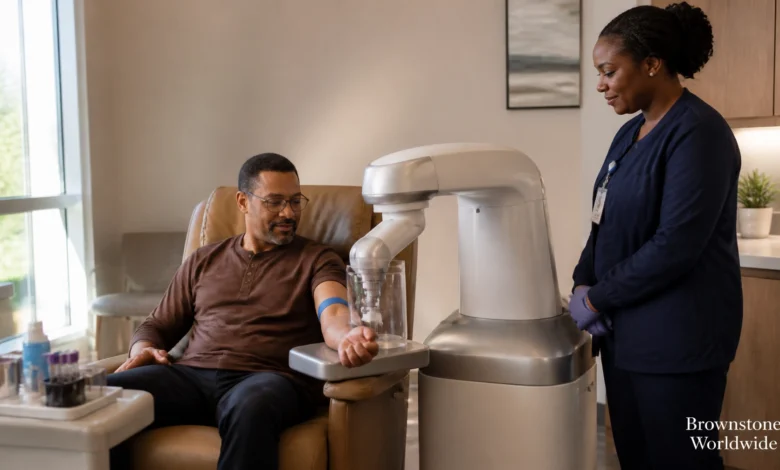
For anyone who looks away at the sight of a needle, a routine blood test may soon feel less stressful. The FDA has authorized Aletta, developed by Vitestro, as the first standalone robotic device designed to draw blood from an adult’s arm without hands-on operator intervention.

Aletta is authorized for adults in outpatient settings. A trained phlebotomist must start and supervise every session, and one phlebotomist may oversee up to three devices at once. The system uses near-infrared light and Doppler ultrasound to identify a suitable vein and distinguish it from an artery. If it cannot find an appropriate vein, it does not proceed.
Once a vein is located, the device applies a tourniquet, disinfects the skin, inserts and disposes of the needle, changes collection tubes, and applies a bandage. If a patient moves excessively, the needle detaches and the draw stops. FDA-reviewed clinical data found successful draws comparable to or better than trained phlebotomists when Aletta proceeded with a stick, including among people reporting difficult vein access and across varying skin tones. Device-related adverse events were uncommon and mild. (FDA; Outlook India)

Still, “robotic” does not mean unsupervised: and it does not guarantee a painless draw or eliminate repeat attempts for every patient. Availability will depend on clinics adopting the technology and meeting FDA requirements.
Earlier coverage from News-Medical.net described a separate Rutgers blood-drawing prototype, showing why automation has attracted medical researchers.
This Front Porch Friday, share your questions with neighbors: Would you choose a supervised robotic draw, or stick with a human phlebotomist? Either way, tell your clinician if you have needle anxiety or difficult veins so your care team can plan ahead. For more accessible health updates, visit Brownstone Worldwide.