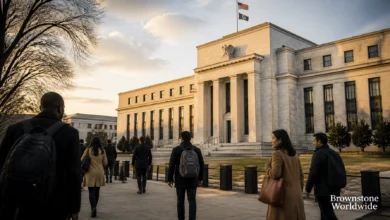
Social Security recipients face looming benefit cuts. Can the program be saved?

Social Security is facing a looming financial crisis, with its trust fund projected to run out of money in just six years. This would trigger automatic cuts in retirement and disability benefits for the millions of Americans who rely on the program for income. However, experts believe that the program’s financial problems are not insurmountable, as there are several ways to address the funding gap.
One option to save Social Security is to eliminate the tax cap that currently shields income over $184,500 from payroll taxes. By phasing out the cap or implementing a “donut hole” approach, where earnings between $184,500 and a higher threshold are exempt from taxes, a significant portion of the funding gap could be closed.
Another solution is to hike the payroll tax, which finances most of the program. While raising the tax may be unpopular, it could be necessary to cover the program’s obligations as the population ages. A 4.6% tax increase split between workers and employers could close the funding gap entirely.
Raising the retirement age is also on the table as a potential solution. By increasing the full retirement age, benefits would be paid out for fewer years, reducing the strain on the program. However, this would result in a benefit cut for recipients, which may not be well-received by workers and retirees.
Cutting benefits for higher-income workers is another proposed solution. By tweaking the formula that calculates benefits or capping benefits for couples above a certain income threshold, a portion of the funding gap could be closed. This would ensure that those who are financially prepared for retirement through other means bear some of the burden of saving Social Security.
Lastly, taxing investment income is a proposed solution that could provide a significant boost to Social Security’s funding. By introducing new taxes on high-income Americans’ investment and business income, the program could close its funding gap entirely. This approach has gained traction with lawmakers like Sen. Bernie Sanders, who believes that taxing investment income could be a viable solution.
In conclusion, while Social Security is facing financial challenges, there are several potential solutions that could save the program from insolvency. Lawmakers will need to make difficult choices about raising taxes, cutting benefits, or implementing other measures to ensure the long-term sustainability of Social Security. By addressing these issues now, we can secure the future of this vital program for generations to come.