Trump’s influence tested in Indiana Republican state Senate primaries

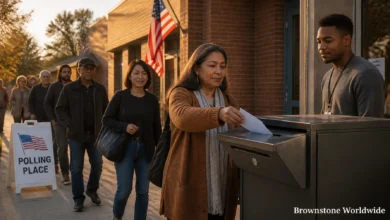
Indiana’s upcoming primary election is set to be a pivotal moment in testing President Donald Trump’s influence over the Republican Party. The primary will serve as a battleground for Trump’s efforts to oust state senators who opposed his push to redraw the state’s congressional map.
In December, twenty-one Republican senators in Indiana voted against redistricting, with eight of them up for reelection this year. Trump has thrown his support behind primary challengers for seven of these senators, with his allies pouring significant financial resources into races that typically fly under the radar of national politics.
The primary has evolved into a contentious and costly intraparty showdown, intensifying divisions among Republicans as the November midterm elections loom large. Indiana Lt. Gov. Micah Beckwith framed the primary as a clash between Republicans who are inclined to avoid conflict and those who believe in fighting for their cause.
The redistricting saga began when Trump pressured Republican-led states to redraw their congressional maps in a bid to secure a stronger majority in the U.S. House. While redistricting is traditionally undertaken once every decade following a census, Trump sought to depart from this norm to gain a political advantage. Texas was the first state to comply, and Indiana was urged to follow suit. Despite Vice President JD Vance’s meetings with state officials and Trump’s involvement via conference call, Indiana senators rebuffed the initiative, marking one of Trump’s initial setbacks in his second term.
The redistricting dispute has fractured the Indiana Republican Party, a state where Trump has consistently enjoyed strong support. Governor Mike Braun, U.S. Senator Jim Banks, and groups like Turning Point Action have aligned themselves with Trump in a bid to unseat the incumbent senators. Jim Bopp, a prominent Indiana attorney leading a PAC allied with Braun, expressed confidence that Trump’s endorsement will carry the challengers to victory.
However, opposition to Trump’s intervention has emerged from anti-Trump Republicans and those wary of federal intrusion into state affairs. Former Governor Mitch Daniels, who had largely retreated from politics, resurfaced to fundraise for targeted incumbents.
The dissenting senators justified their stance by citing overwhelming opposition from their constituents to Trump’s redistricting plan. Some senators expressed discomfort with Trump’s forceful approach in pushing the agenda, emphasizing Indiana’s independent political ethos.
Mike Murphy, a former Republican state representative, criticized Trump and his allies for their lack of understanding of Indiana’s political landscape. He underscored the importance of grassroots engagement in Indiana politics, contrasting it with the high-level approach adopted by Trump and his supporters.
Bopp, a proponent of the Trump-backed challengers, framed the primary as an opportunity for Indiana Republicans to underscore the significance of redrawing congressional boundaries in the state. He emphasized the need for Republican primary voters to support candidates aligned with Trump’s agenda to prevent a Democratic-controlled House that could undermine Trump’s presidency and the nation as a whole.
In conclusion, Indiana’s primary election will serve as a litmus test for Trump’s enduring influence within the Republican Party, highlighting the tensions and divisions that have surfaced within the party. As the primary approaches, the outcome will not only shape the political landscape in Indiana but also have broader implications for the GOP heading into the crucial midterm elections.