Will gas dip below $3 a gallon this year? Here’s what experts predict.
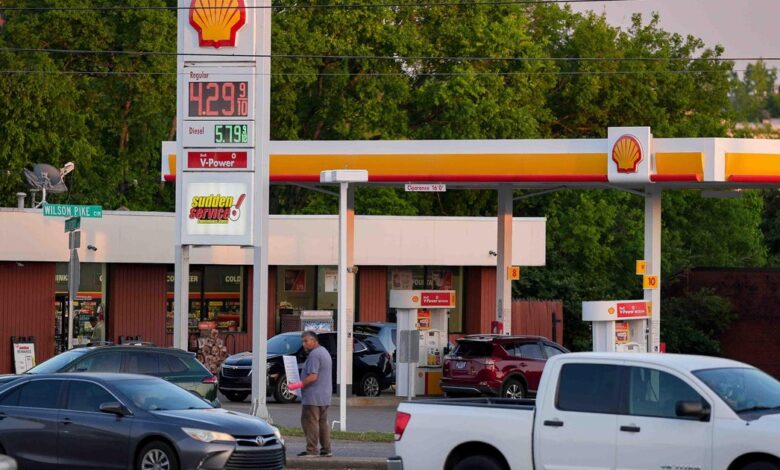
Gas prices in the U.S. have been a source of concern for drivers lately, with the average price inching closer to $4 a gallon. While there has been some relief at the pump, experts caution that a return to pre-Iran war prices is unlikely in the near future.
Mark Zandi, chief economist at Moody’s Analytics, predicts that gas prices are unlikely to drop below $3 this year unless there is a major economic shock like a recession. Even under the most optimistic scenarios, Zandi believes gas prices will likely settle around $3.50 by the end of the year.
The recent conflict in Iran has had a significant impact on fuel costs, with the national average price of gas jumping from $2.98 a gallon to $4.17 a gallon in a short span of time. The disruption in oil shipments through the Strait of Hormuz has led to elevated oil prices, which in turn have kept gas prices high.
Experts warn that it may take months or even years for the global oil supply to recover from the damage caused by the war in the Middle East. The uncertainty surrounding the reopening of the Strait of Hormuz further complicates the situation, making it likely that U.S. fuel prices will remain elevated for the foreseeable future.
As of now, the average U.S. gas price stands at $4.02 according to AAA, a significant increase since the start of the conflict. While there is hope for a potential drop below $3 a gallon if the strait reopens, experts caution that it is not guaranteed.
Energy Secretary Chris Wright and President Trump have conflicting views on when gas prices will retreat below $3 a gallon, with Wright suggesting it could happen later this year or even next year. Trump, on the other hand, believes prices will drop as soon as the Iran war ends.
Despite some fluctuations in oil prices, experts like Patrick De Haan warn that gas prices could rise again if tensions between the U.S. and Iran escalate further. The ongoing volatility in oil prices and the potential for disruptions during hurricane season contribute to the uncertainty surrounding fuel costs.
Research shows that higher gas prices disproportionately affect lower-income households, who spend a larger portion of their income on fuel compared to wealthier households. The increase in gas prices could also offset the benefits of tax refunds for many Americans, leading to higher overall expenses for the average household.
In conclusion, the outlook for gas prices in the U.S. remains uncertain, with experts predicting continued volatility in the coming months. Drivers should be prepared for the possibility of higher fuel costs and factor this into their budgeting decisions.