M7.7 Earthquake Strikes Indonesia’s Flores Island Leaving Dozens Dead and Triggering Tsunami Warnings
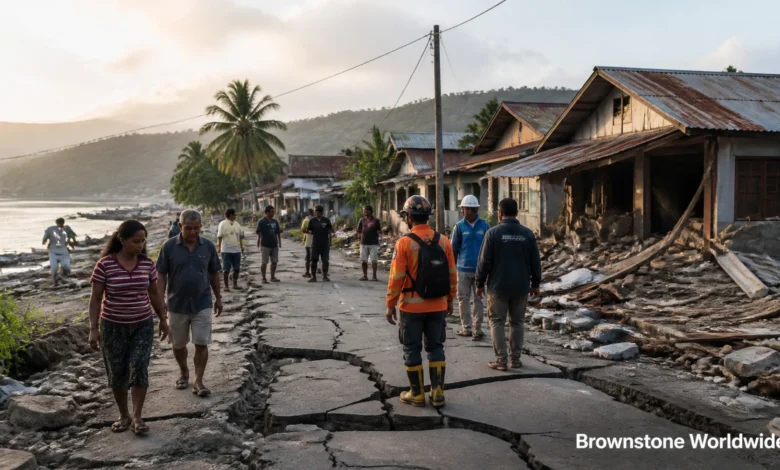
A magnitude 7.7 earthquake struck off the northern coast of Indonesia’s Flores Island early Saturday, August 15, killing at least 47 people and causing widespread damage across East Nusa Tenggara. The U.S. Geological Survey said the earthquake occurred at a shallow depth of about 10 kilometers, roughly 68 kilometers north-northwest of Ende.
Indonesia’s Meteorology, Climatology and Geophysics Agency issued tsunami warnings for nearby coastal areas, urging residents to move away from beaches and river mouths. The warning was later lifted after officials monitored sea levels, but the emergency response continued as reports of damage and casualties developed.

The earthquake destroyed at least 157 homes and damaged nearly 200 others, according to reporting by Al Jazeera. Landslides blocked roads and disrupted communications in some areas, making it difficult for rescue teams to reach affected communities. More than 230 aftershocks were recorded, including one measured at magnitude 6.2.
The Flores region has faced deadly seismic events before. The USGS notes that a magnitude 7.8 earthquake and tsunami struck nearby in 1992, killing at least 2,500 people. The latest quake was linked by Indonesia’s BMKG to the Flores back-arc thrust fault, a known source of powerful earthquakes. ANTARA News reported that the fault may produce earthquakes as large as magnitude 7.8 to 7.9.

For residents in affected areas, officials have urged people to stay away from damaged buildings, remain alert for aftershocks, and follow instructions from BMKG, local authorities, and Indonesia’s disaster agency. Even after a tsunami warning ends, coastal residents should continue monitoring official updates.

Neighbors can help by checking on older adults, children, and people with disabilities, sharing verified information, and keeping roads clear for emergency crews. As rescue operations continue, what preparedness steps does your household or community rely on when warnings arrive? Follow Brownstone Worldwide for continuing world news updates.