Bond Sell-Off Deepens as 10-Year Treasury Yield Hits 5.31%, Highest Since 2007
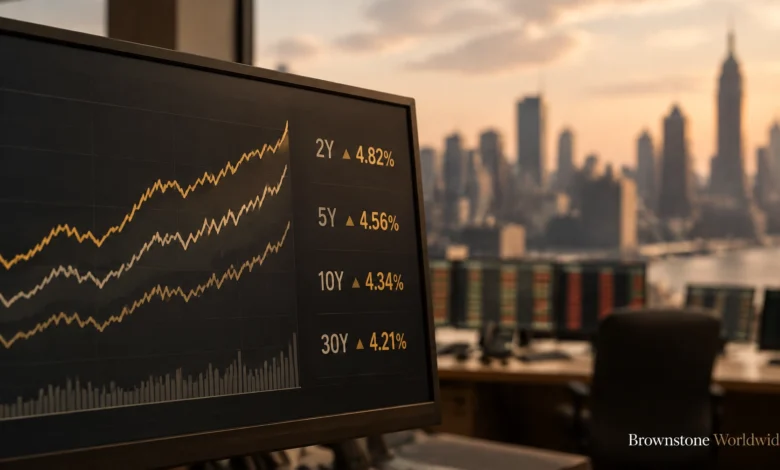
Global bond markets opened October under pressure as the U.S. 10-year Treasury yield climbed to 5.31%, its highest level since 2007. The move followed the worst quarterly performance for U.S. Treasuries since 1994, according to Reuters.
The sell-off is not limited to the United States. The yield on Britain’s 30-year government bond moved above 6% for the first time since 1998, while European stocks declined. The Guardian reported that investors are increasingly concerned about government deficits, new debt issuance and the possibility that inflation will remain elevated.

Oil is adding to those concerns. Brent crude returned above $100 a barrel as the Middle East conflict continued to disrupt supply expectations, Euronews reported. Higher energy costs can filter into transportation, food and household expenses, while also making it harder for central banks to ease interest rates.
U.S. stocks were mixed. The S&P 500 dipped while the Nasdaq moved higher after data showed the Personal Consumption Expenditures price index rose 3.4% annually in August, below the 3.7% estimate, according to Free Malaysia Today.

For households, higher Treasury yields can eventually mean more expensive mortgages, auto loans, credit and business financing. Quarter-end portfolio rebalancing may also have amplified today’s moves, but the larger questions are fiscal discipline, inflation and oil.
For now, review adjustable-rate debt, avoid making major financial decisions based on a single trading session, and check your budget for fuel and borrowing-cost exposure. How is your household or neighborhood preparing for a higher-rate environment? Share your perspective with Brownstone Worldwide.