

NOAA Winter Outlook Favors Wetter Conditions Across the South as El Niño Shapes the Season
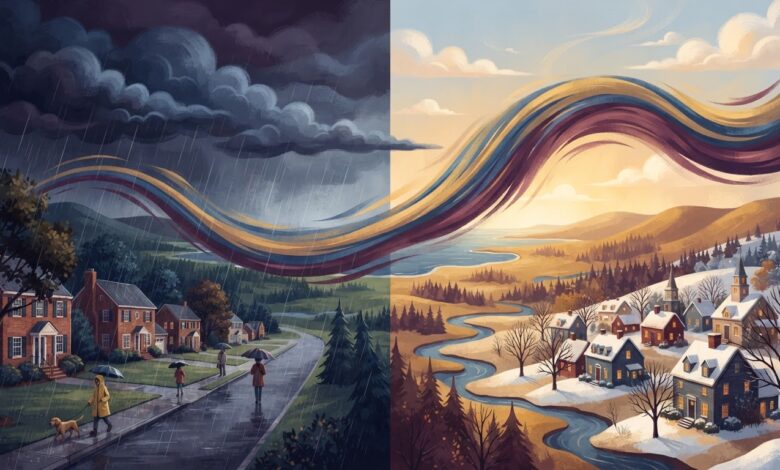
November 1, 2026 | Weather and Environment — The National Oceanic and Atmospheric Administration’s outlook for the coming winter favors warmer-than-average conditions in much of the northern United States and wetter-than-average conditions across parts of the South and East. NOAA published the outlook on October 15 for the December 2026 through February 2027 season, citing the expected influence of a strong El Niño pattern.
What NOAA expects
In its official winter outlook, NOAA says higher chances of above-normal temperatures extend across the Pacific Northwest, northern Rockies, Midwest, Mississippi Valley, much of the East and Alaska. The precipitation outlook favors wetter-than-average conditions across the southern tier from the Southwest toward the Southeast, as well as portions of the East Coast.
Other regions have weaker signals. NOAA describes equal chances of below-, near- or above-normal seasonal temperatures for Hawaii and much of the Southwest, and notes that the outlook is not uniform across every state or county.
What El Niño changes—and what it does not
El Niño involves unusually warm water in the central and eastern tropical Pacific Ocean and can influence atmospheric circulation. That can shift the jet stream and change the odds of certain winter weather patterns in North America. The relationship is statistical, not a timetable for a particular snowstorm or flood.
NOAA’s National Weather Service director, Ken Graham, said the pattern could tilt the odds toward stormier weather in the South. He also cautioned that precipitation can bring both drought relief and flood or mudslide risks, depending on local conditions.
Drought conditions could improve in some regions
NOAA expects drought to improve or end in parts of the Southwest, Southern Great Plains, Southeast and East Coast by late January. Meanwhile, drought could develop or worsen in parts of the northern Rockies, northeastern Oregon and eastern Washington. These are probabilities over a season, not guarantees for an individual community.
What this means for Georgia and nearby states
For the Southeast, the elevated chance of a wetter winter is a reason to review routine drainage, travel and household preparedness plans. It does not mean every week will be rainy or that a specific storm is forecast for Georgia. Residents should rely on National Weather Service local forecasts and alerts for short-term decisions.
What it means for the Neighborhood
Seasonal outlooks are most useful for planning ahead: checking gutters, keeping a basic emergency kit, reviewing insurance and knowing how to receive official weather alerts. As winter approaches, short-range forecasts will provide the detail needed for individual days and events.
Sources: NOAA winter outlook, October 15, 2026; NOAA Climate Prediction Center; National Weather Service.