
Schumer Says He Has Votes to Defeat Van Hollen in Senate Democratic Leadership Contest
WASHINGTON — November 18, 2026. Senate Democratic leader Chuck Schumer says he has secured the votes needed to remain his party’s leader and become Senate majority leader when Democrats take control in January, despite a challenge from Maryland Sen. Chris Van Hollen. The outcome remains undecided: Senate Democrats are scheduled to choose their leader in a closed-door, secret-ballot vote on December 1.
Schumer says he has the votes
“I’m confident I’ll be the next leader. I have the votes,” Schumer told reporters Tuesday following the Senate Democrats’ weekly lunch, according to Roll Call. He said his priorities would include lowering costs and fighting corruption. Schumer has led Senate Democrats since 2017, and supporters credit him with helping the party win back control of the chamber in the November 3 midterm elections.
Why Van Hollen is challenging him
Van Hollen says Democrats need a new leadership approach that delivers for working families, confronts political corruption and makes more aggressive use of congressional power. He has criticized Schumer’s approach to Democratic primary contests and argued that lawmakers should use federal spending negotiations to challenge the administration’s Iran war policy.
Van Hollen has acknowledged he is the underdog but insists his campaign is gaining momentum. He told reporters Tuesday that he believed there had been an effort to accelerate the leadership vote to curtail his challenge. Senate Democrats indicated they would retain the December 1 date, according to Roll Call.
What do the vote counts show?
Schumer’s assertion that he has sufficient support has not been independently established by a public roll call. The Washington Post reported that more than a dozen current and incoming Democratic senators had publicly committed to him, while four had publicly backed Van Hollen. Van Hollen claimed additional private support. Most senators had not publicly disclosed their choice.
The Democratic caucus is expected to have 56 members in the new Senate, including two independents who caucus with Democrats. If all eligible members participate, a candidate would need at least 28 votes to win. Because ballots are secret, public endorsements and private assurances do not guarantee the outcome.
Incoming senators will have a voice
One major procedural question is whether the incoming class gets a full opportunity to question the candidates before voting. Under the caucus process, senators-elect may participate in the leadership election, while outgoing senators do not. Sen. Tim Kaine and other Democrats argued that the party should not rush the vote before newly elected members can participate.
Van Hollen has received support from Sen. Bernie Sanders and incoming senators including Abdul El-Sayed of Michigan and Peggy Flanagan of Minnesota. Schumer has the backing of several established Democrats who credit his election strategy and experience.
Why this contest matters
The Senate majority leader plays a central role in setting the chamber’s legislative agenda, coordinating votes and negotiating with the House and White House. Democrats’ return to the majority gives the eventual leader substantial influence over spending, judicial confirmations, investigations and national security policy, although Senate rules still impose limits on what a majority can accomplish alone.
The contest also reflects a larger Democratic debate following the party’s midterm victories: should the party continue with experienced leadership or choose a more confrontational direction? Schumer’s supporters emphasize institutional experience and electoral success; Van Hollen’s supporters emphasize change, accountability and a stronger response to the Trump administration.
What happens next?
The leadership vote is set for December 1, 2026. Schumer remains the current Democratic leader until the caucus selects its leadership team for the next Congress. Neither candidate should be described as the confirmed next majority leader before the vote.
Sources: Roll Call, November 17; The Washington Post, November 18; Reuters, November 13; CBS News, November 12; CBS New York, November 17.
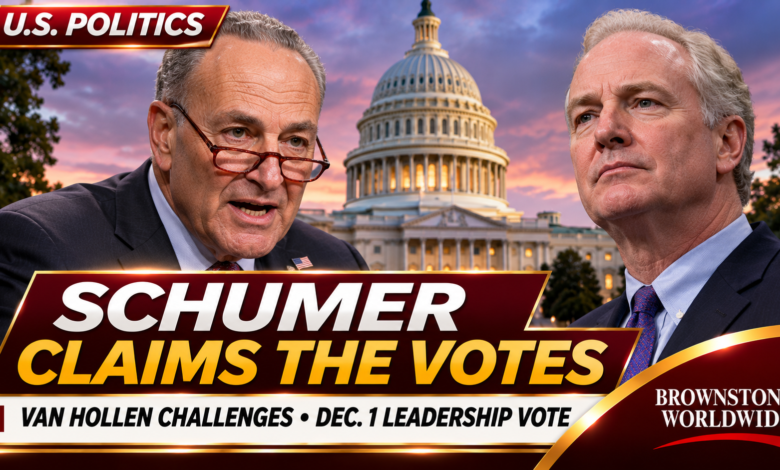
Featured image is a Brownstone Worldwide editorial illustration, not a photograph of the two senators together.