

White House Counsel Will Scharf Rejects Democrats’ Records Demands Ahead of Congressional Investigations
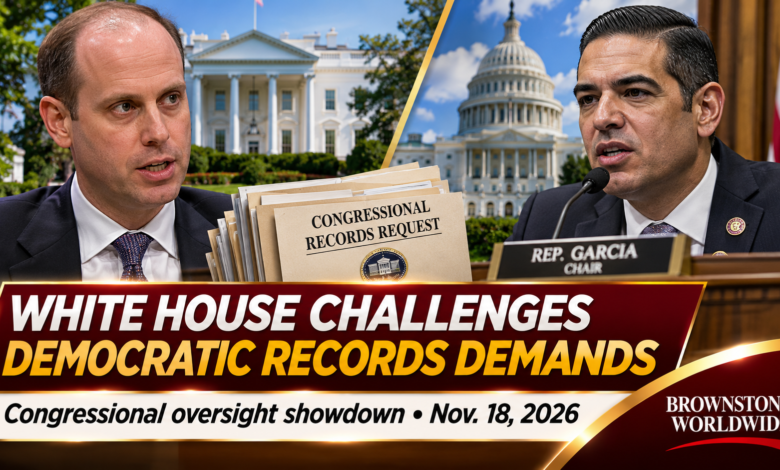
WASHINGTON — November 18, 2026. White House counsel Will Scharf is rejecting a series of records demands from Democratic lawmakers, arguing that the Trump administration is not required to accommodate requests from members who remain in the congressional minority. His position comes as Democrats prepare to assume control of congressional committees in January and launch investigations into the president, his family and senior administration officials.
What Scharf told Congress
In a letter sent Wednesday to ranking members of House and Senate committees, Scharf contended that several requests were motivated by partisan hostility rather than legitimate legislative oversight. Bloomberg Government reported that the White House cited longstanding executive-branch practice of prioritizing requests from committees, subcommittees and their chairs. Scharf accused some Democrats of using the oversight process to harass administration officials.
The White House’s argument is about the authority and treatment of current minority-member requests. It should not be confused with a blanket legal exemption from future committee subpoenas. Once Democrats take committee leadership in January, their powers to issue subpoenas will expand, subject to applicable rules and constitutional limits.
Garcia sends preservation demands
Rep. Robert Garcia, the incoming chair of the House Oversight and Government Reform Committee, sent document-preservation letters Wednesday to more than a dozen people connected to President Donald Trump, according to NPR and the Associated Press. Reported recipients include Donald Trump Jr., Eric Trump, Jared Kushner, Vice President JD Vance, Attorney General Todd Blanche, Stephen Miller, Susie Wiles and former Homeland Security Secretary Kristi Noem.
The notices seek preservation of records potentially relevant to investigations involving Trump family business interests, alleged corporate conflicts, immigration-enforcement practices and the administration’s handling of records concerning Jeffrey Epstein. A preservation letter is not itself a subpoena demanding immediate production of documents. Its purpose is to put recipients on notice that relevant records should not be destroyed while future inquiries are considered.
White House imposes testimony approval requirement
In a separate November 16 memorandum, Scharf instructed executive-branch agencies to obtain approval from the White House Office of Legislative Affairs and Office of White House Counsel before agency personnel agree to testify before congressional committees. Axios and Forbes reported the directive as the administration prepared to contest investigations it views as politically motivated.
Administration officials say they will engage with legitimate congressional requests but resist what they characterize as harassment. Democrats say they intend to use Congress’s oversight authority to investigate possible misconduct and develop legislation. These are competing political and legal positions, not findings that the allegations under investigation have been proven.
Can Congress compel records?
Congress has broad investigatory powers when inquiries serve a legitimate legislative purpose. The Supreme Court has recognized those powers while also imposing limits, particularly where congressional demands implicate presidential interests. Executive privilege and other legal objections can lead to negotiations or court challenges. A court may quash an invalid subpoena, but that does not automatically make the lawmakers who issued it criminals.
In an earlier November 9 letter to Garcia, Scharf warned that investigative actions designed solely to intimidate or punish could exceed constitutional limits. Legal experts cited by CBS News questioned whether such disputes would amount to criminal conduct. Congress can pursue subpoenas and contempt procedures, but enforcement may be prolonged and contested.
What happens next?
The next major turning point is January 2027, when Democrats are expected to take over committee leadership and gain greater control over hearings, subpoenas and investigative agendas. The White House could negotiate, comply with particular demands or challenge them in court. The public should distinguish accusations of misconduct from evidence developed through investigations.
Brownstone Worldwide analysis: The dispute tests the balance between Congress’s constitutional oversight responsibility and the executive branch’s ability to protect privileged communications and resist requests it considers improper. It also raises a practical question: whether record preservation and timely disclosure can be maintained during a politically charged transfer of congressional power.
Sources: Bloomberg Government, November 18, 2026; Associated Press, November 18, 2026; NPR, November 18, 2026; Axios, November 16, 2026; CBS News, November 12, 2026; White House counsel’s November 9 letter.
Featured image is an editorial composite, not a photograph of a joint meeting or exchange.