

South Korea Crosses $1 Trillion in Exports as AI Chip Demand Reshapes Global Trade
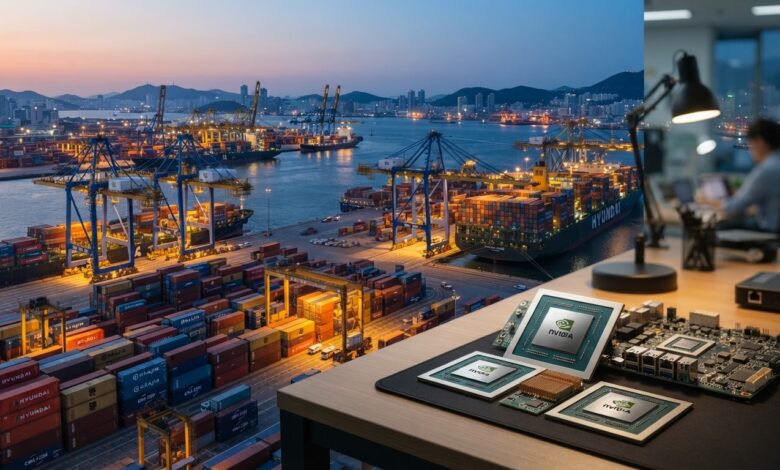
SEOUL — November 19, 2026. South Korea’s merchandise exports have crossed $1 trillion for the year, according to its trade ministry, a milestone powered by extraordinary demand for semiconductors used in artificial intelligence. Reuters reports that South Korea is the fourth country to reach the threshold, after Germany, the United States and China.
Chips are driving the surge
Semiconductor exports increased 184% during the first three quarters of 2026 and accounted for approximately 42% of the country’s total exports, according to figures cited by Reuters. The sharp increase illustrates how the global rush to build AI data centers is changing national trade balances and demand for memory and other chips. It also highlights concentration risk: a country whose export boom depends heavily on one industry can be vulnerable if technology spending slows.
Not every industry is sharing the boom
South Korea’s traditional export pillars, including automobiles, steel and shipbuilding, have faced a more difficult environment shaped by trade restrictions and geopolitical uncertainty. President Lee Jae Myung has said his government wants the growth to reach more industries and regions, rather than remain concentrated in a small number of semiconductor producers.
What the record does—and does not—mean
A trillion-dollar export total is a measure of goods sold abroad, not household income or a direct measure of prosperity. Reuters reports that high borrowing costs, prices and weak domestic demand continue to challenge households even as export receipts rise. Policymakers are proposing investment in emerging industries, education and regional economic development to broaden the benefits.
Why American businesses should watch
AI hardware demand affects the cost and availability of computing infrastructure around the world. U.S. cloud providers, software companies and independent creators rely on an international supply chain whose prices can change as chip demand and capacity fluctuate. The export milestone is evidence of strong current demand, not proof that AI investment will remain at this pace indefinitely.
What comes next
Investors and governments will watch semiconductor orders, export concentration, trade barriers and whether stronger shipments translate into domestic jobs and investment. For Brownstone readers, the key distinction is between a headline export record and the broader question of who benefits from it.